
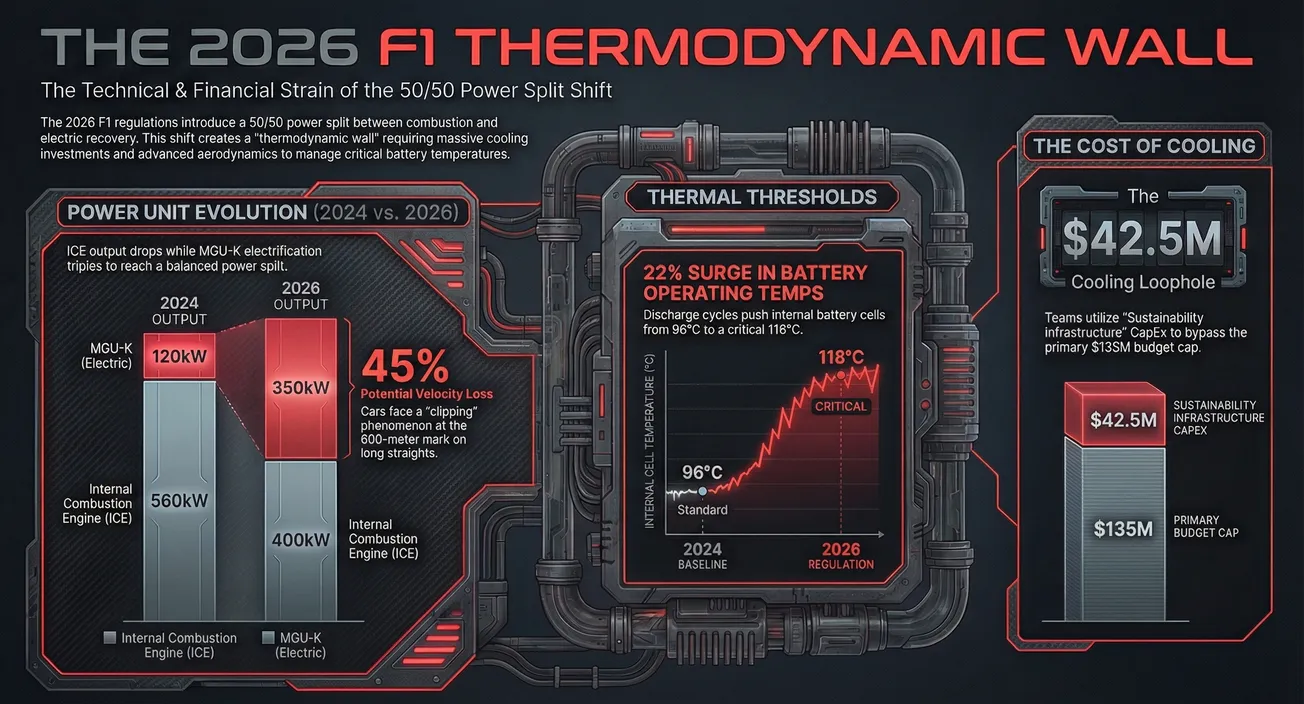
F1 2026: The Energy Mapping Matrix Costing Teams $42.5 Million
2026 regs force a 50/50 power split. Teams face a 115% R&D cost hike and 118°C battery peaks, demanding $42.5M in new cooling infrastructure.
Race weekend decisions, tire strategies, pit stop execution, risk management, and the real-time operational intelligence that determines podium finishes.
2026 regs force a 50/50 power split. Teams face a 115% R&D cost hike and 118°C battery peaks, demanding $42.5M in new cooling infrastructure.
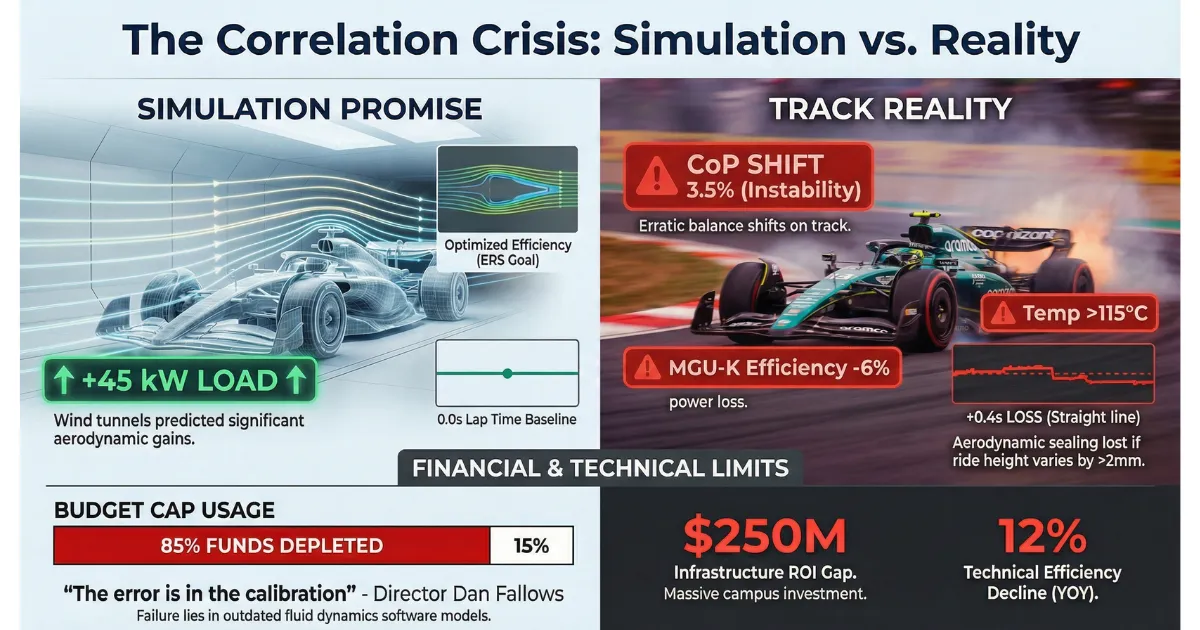
Aston Martin invirtió $250M, pero el AMR24 pierde 12% de eficiencia. Análisis de la fallida correlación aerodinámica entre el túnel y la pista.
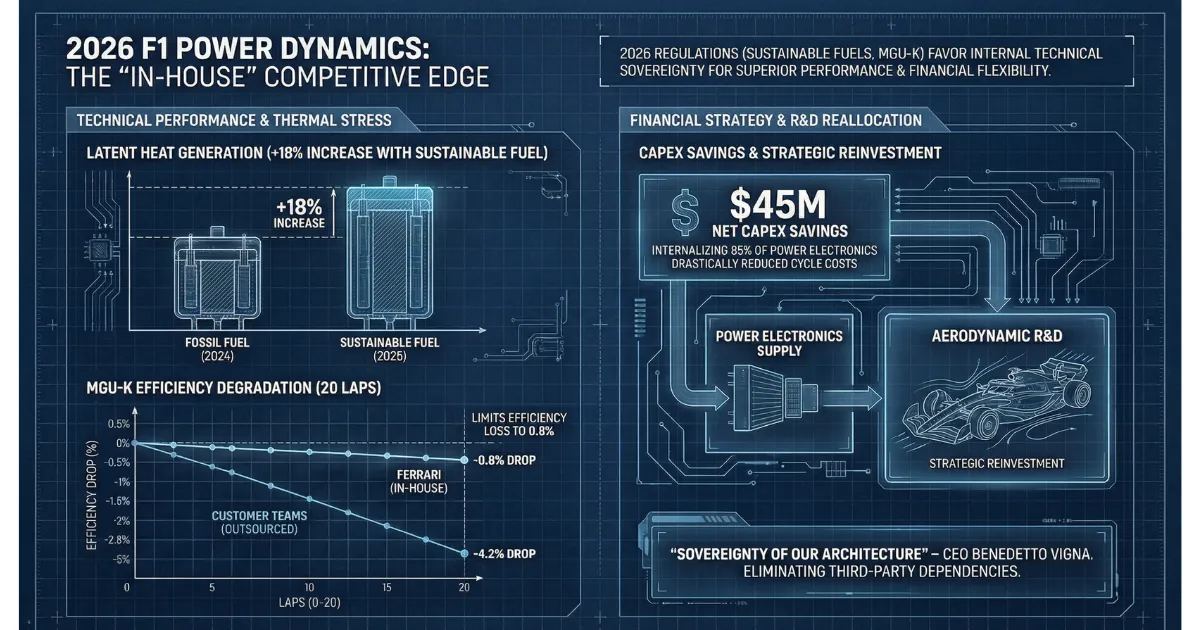
Ferrari leverages vertical integration to curb 2026 thermal risks. We analyze MGU-K variance and CapEx efficiency in the sustainable fuel era.
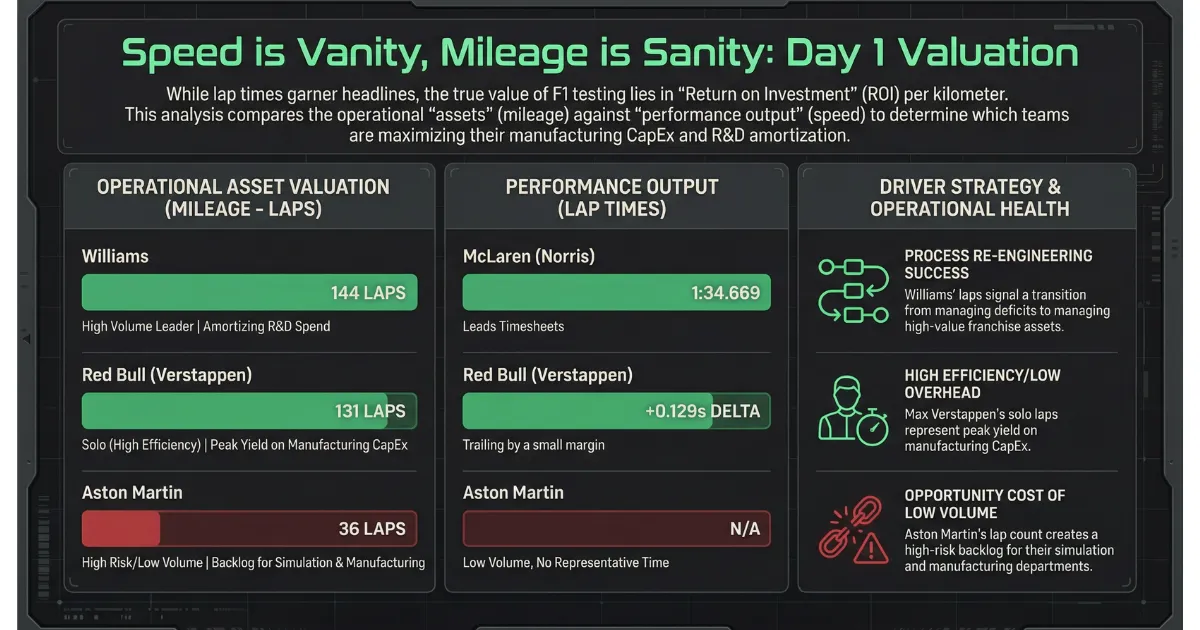
Analysis: Lando Norris fastest on day one of F1 testing in Bahrain. McLaren validates aero ROI while Red Bull maximizes mileage per dollar spent.
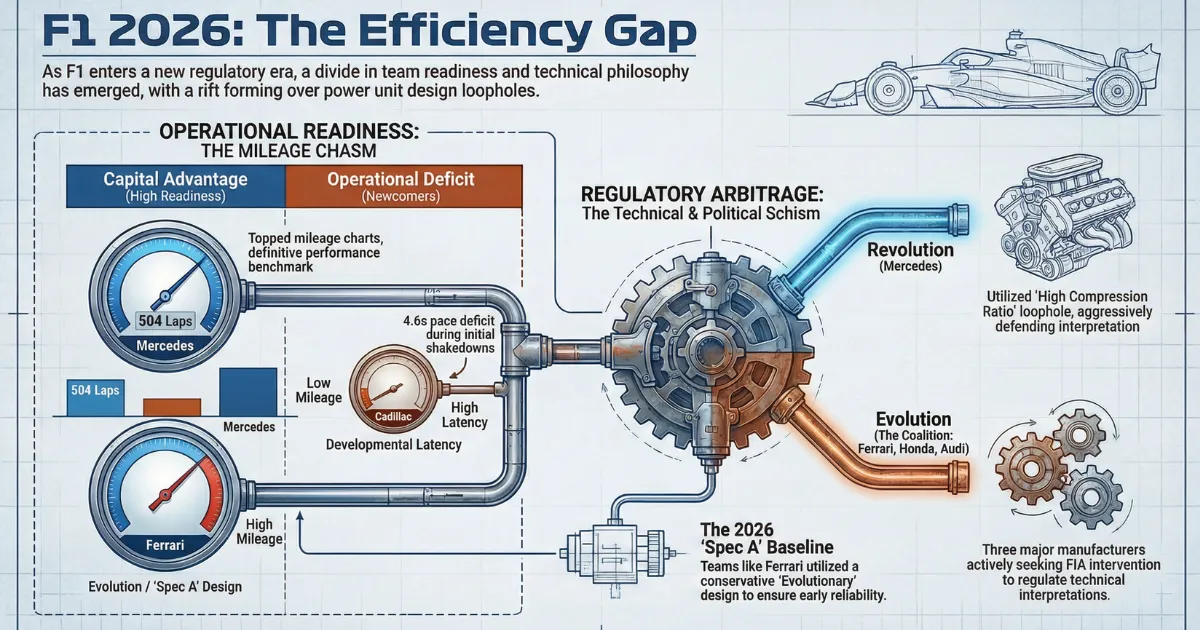
F1 2026 pre-season testing begins in Bahrain, revealing a high-stakes battle of regulatory arbitrage, compression ratio loops, and CapEx warfare.
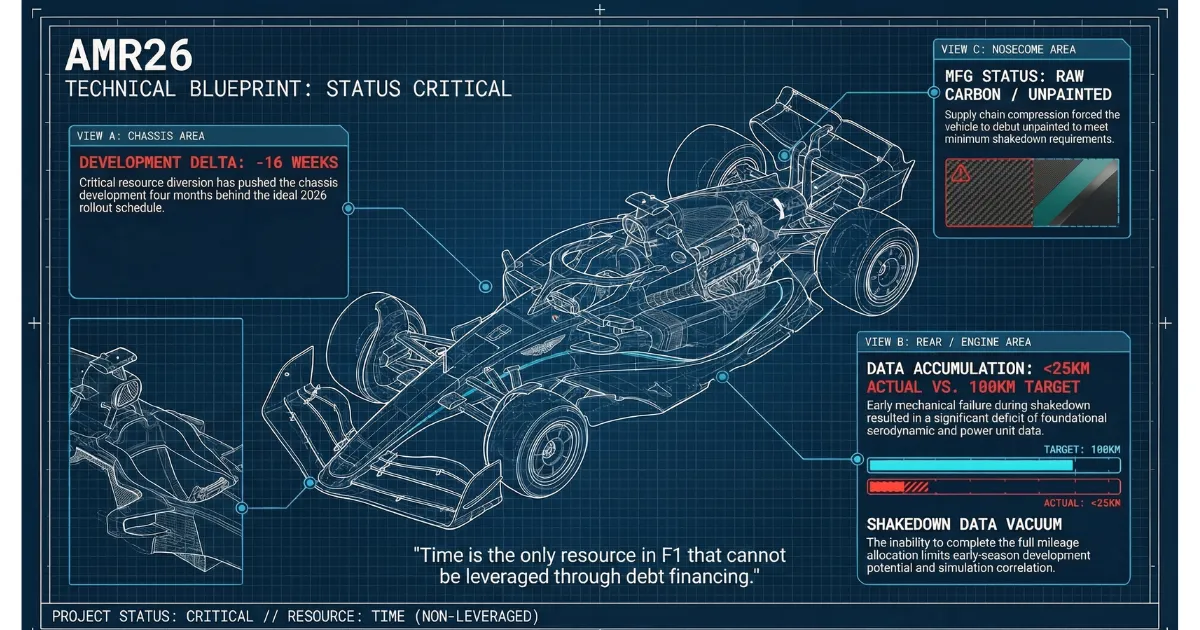
How a 16-week development deficit and supply chain compression threaten Adrian Newey's first Silverstone project.
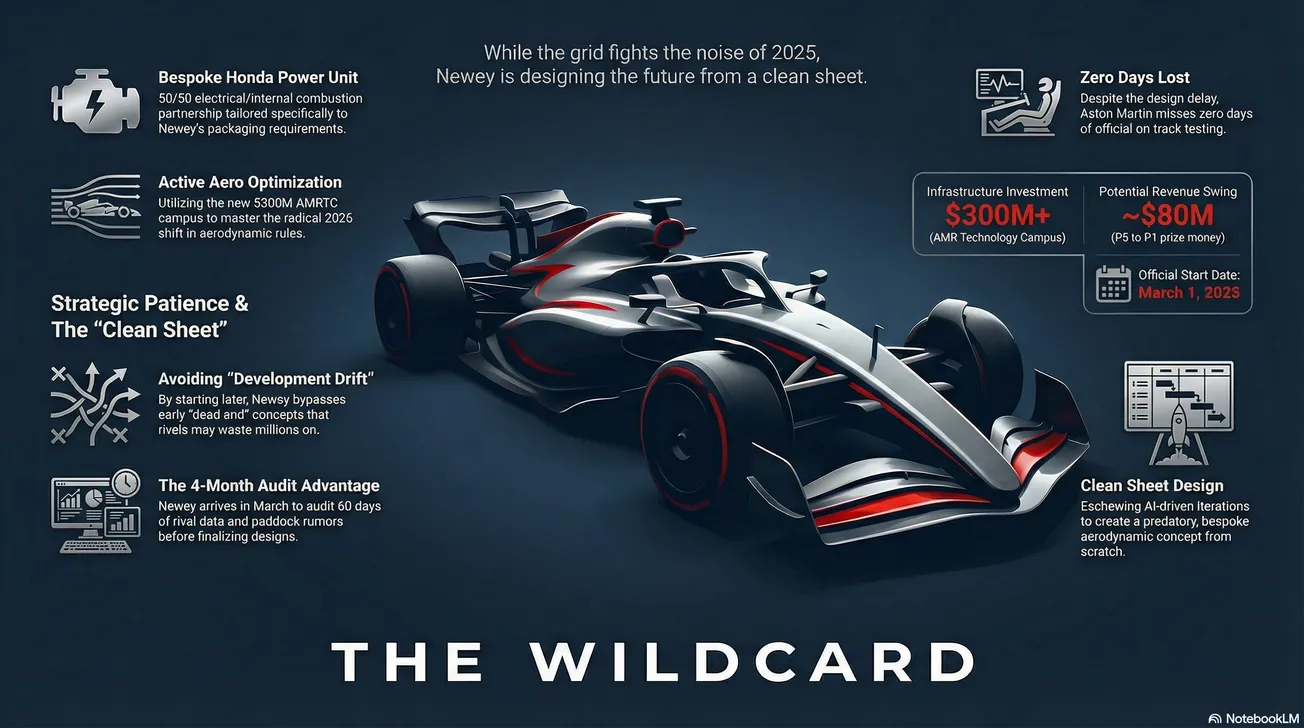
Adrian Newey has built a Hall of Fame career on this exact pattern: strategic patience, late-stage intervention, and exploiting what rivals discover the hard way.
Technical investigation into the Mercedes W17 engine row. Explaining the thermal expansion loophole, compression ratio regulations, and the 2026 power advantage.
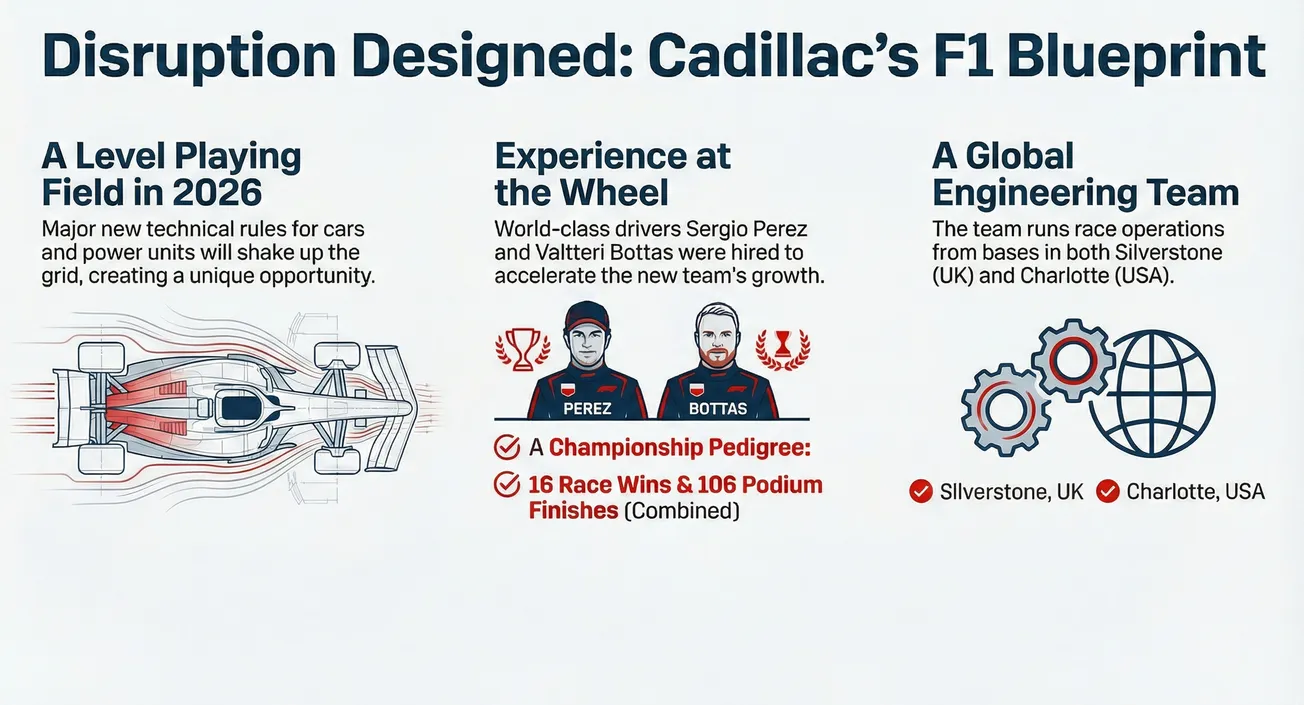
Deconstructing Cadillac’s 2026 Formula 1 entry. Analysis of the $450M anti-dilution fee, the GM power unit roadmap, and the disruption of the F1 business model.
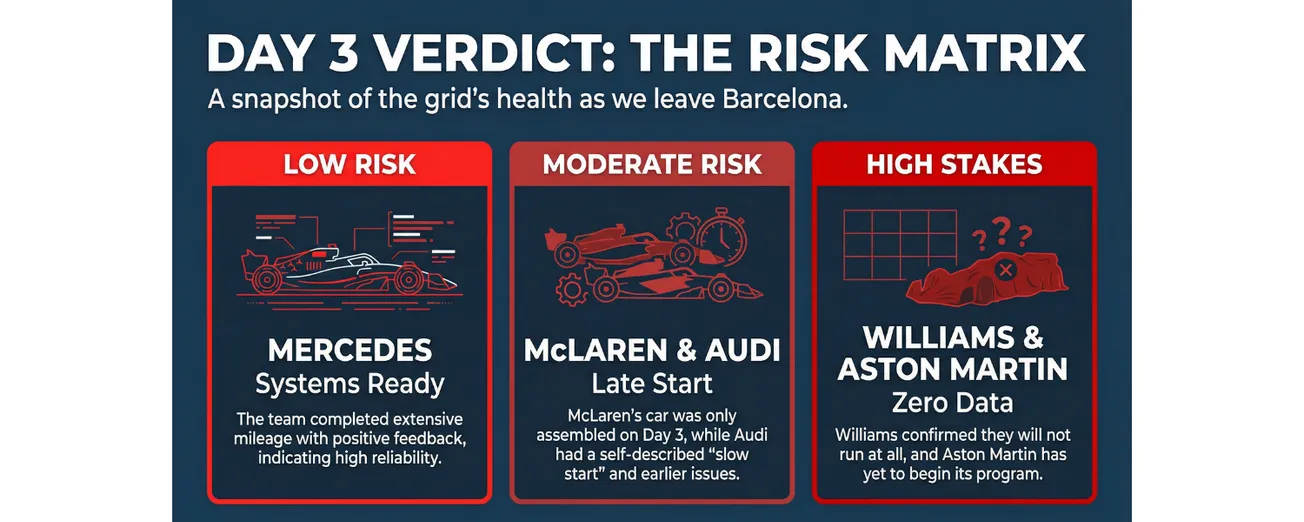
Analyzing the F1 2026 regulatory shift: 100% sustainable fuels, the removal of MGU-H, and the 350kW electric boost. What the Barcelona shakedown revealed.