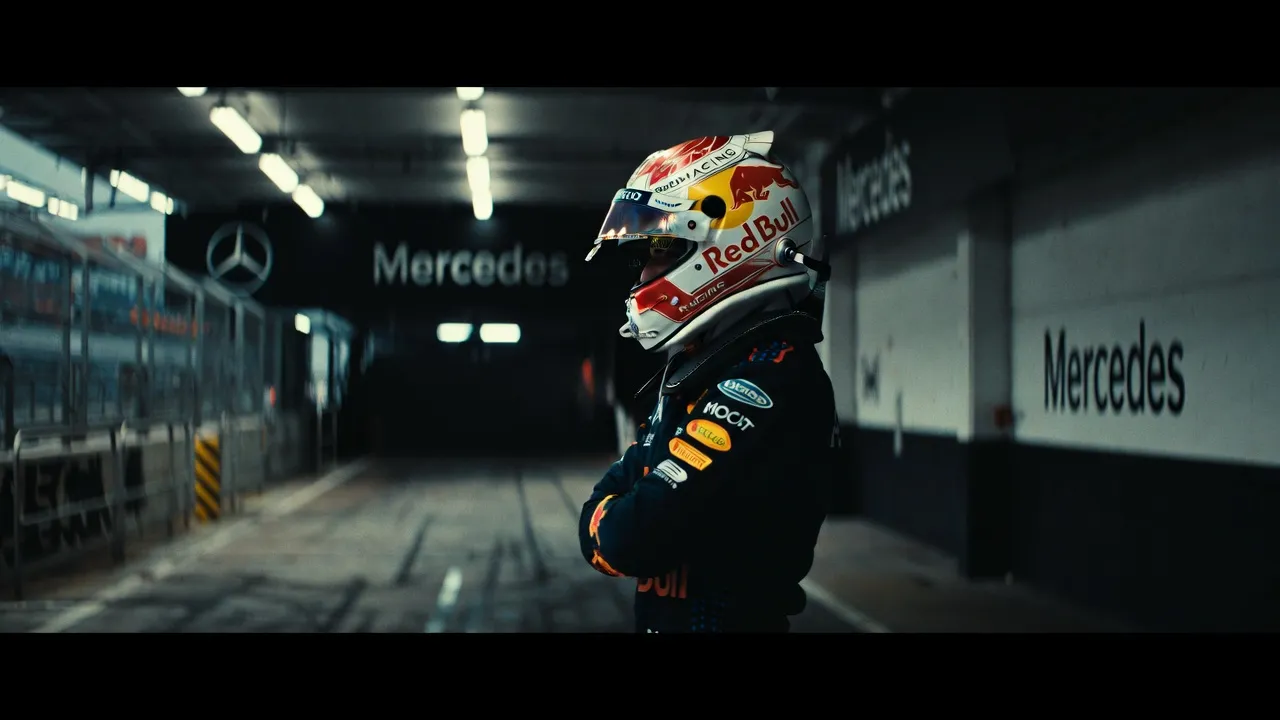
During the second Bahrain pre-season test, Max Verstappen did something unusual for a four-time world champion with a race contract and a factory engine deal: he publicly complained about the sport he dominates. Not once, but repeatedly, and with escalating intensity.
"It feels a bit more like Formula E on steroids. As a pure driver, I enjoy driving flat out — and at the moment, you cannot drive like that." — Max Verstappen · Bahrain Pre-Season Test · February 2026
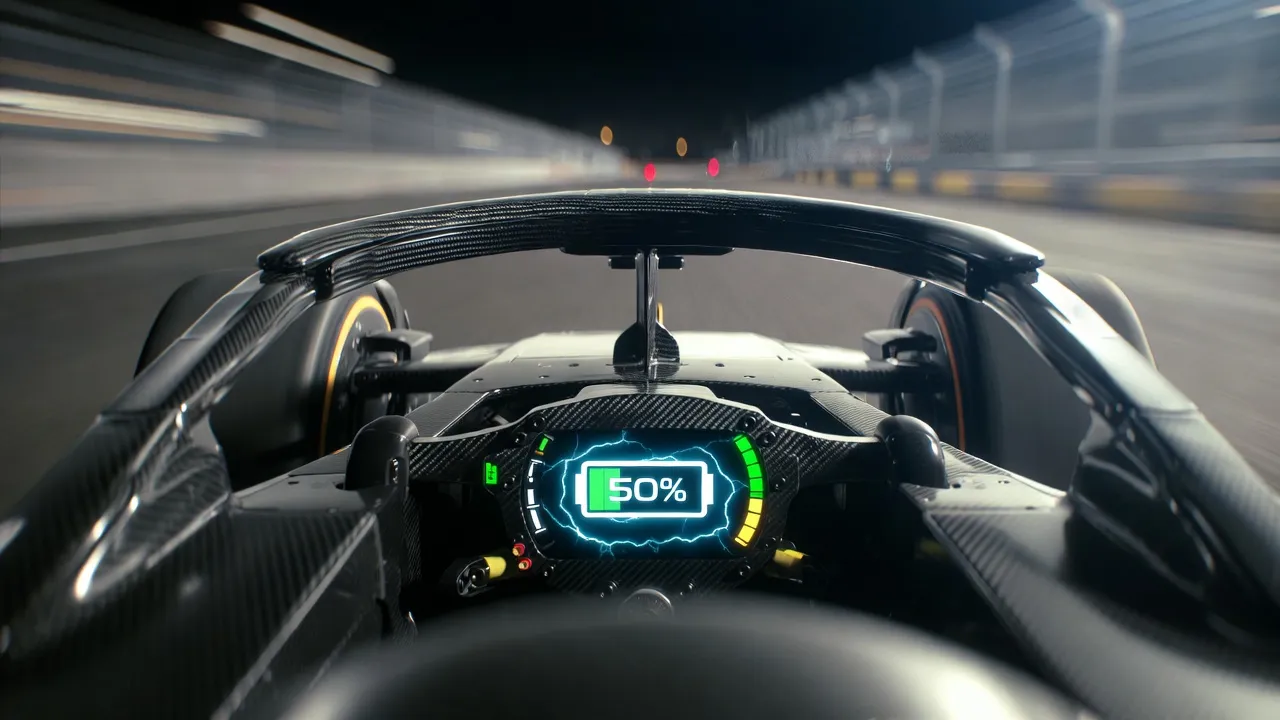
The new 2026 regulations have reshaped Formula 1 machinery at every level — aerodynamics, tyres, chassis dimensions, and most critically, the power unit. The iconic DRS system that defined overtaking since 2011 is gone, replaced by Active Aerodynamics and a Boost Mode that rewards energy management over outright throttle aggression. For a driver who built his entire career on the latter, it's a different world.
Verstappen went further than most expected, comparing the experience to "Formula E on steroids," throwing doubt on his long-term F1 future, and noting that at least at the Nürburgring 24 Hours, he could "drive flat out without looking after my battery." His Red Bull technical director, Pierre Wache, didn't even try to sell the driver on the new philosophy: "It's not my goal to make him happy. We can make him happy by winning the race."
It was a remarkable public moment — the sport's biggest star treating a press scrum like a therapy session. But behind the drama, there's a far more interesting story: the reason the 2026 regulations exist at all.
— WHY IT HAPPENED —
The 2026 power unit regulations didn't emerge from a desire to frustrate Max Verstappen. They emerged from a very specific commercial problem: Formula 1's previous engine framework was too expensive, too complex, and too disconnected from road car technology to attract new manufacturers.
The outgoing V6 hybrid era — which ran from 2014 through 2025 — featured a component called the MGU-H, a heat-recovery unit of extraordinary engineering sophistication and near-zero relevance to anything a consumer would ever buy. It was the kind of technology that won awards in engineering journals and deterred every automaker that ran the numbers on joining F1.
The FIA's solution was deliberate: delete the MGU-H, dramatically increase the electrical component's role in total power output, and align the technology with where the global automotive industry was already heading. The result is a power unit where 50% of output comes from electrical systems — nearly 470 kW of electrical power, a 194% increase over the previous era. That number sounds like a performance decision. It was actually a sales pitch.
It worked. Ford, which hadn't been in Formula 1 since 2004, returned as Red Bull's technical partner. Audi committed over an estimated €1 billion to acquire Sauber and build a works team from the ground up. Cadillac entered as an 11th team — the first new constructor since 2016 — under the General Motors umbrella. Three of the world's most recognizable automotive brands came to the table because the regulations finally spoke their language.
2026 Power Unit Landscape — All 5 Manufacturers
| ERA | POWER SPLIT | ELEC OUTPUT | MGMT DEMAND | VERSTAPPEN INDEX |
|---|---|---|---|---|
|
2014 – 2025
V6 HYBRID · MGU-H ERA
|
~160 kW |
LOW |
😍 |
|
|
2026 →
V6 · NO MGU-H · BOOST MODE
|
~470 kW |
CRITICAL |
😤 |
|
|
Δ CHANGE
REGULATION DELTA
|
ICE share ↓ 30 pts |
+194% ⚡ |
+300% |
The complaint |
— ECONOMIC IMPACT —
To understand the financial stakes of the 2026 regulations, you need to start with the cost cap. The FIA raised the Power Unit development cap from $95 million to $130 million per year — a 37% increase. That number sounds generous, but it masks a significant redistribution of advantage.
For Mercedes and Ferrari — manufacturers who spent the entire 2014–2025 era perfecting their hybrid systems — the cap increase is essentially inflation relief. They were already operating at or near the limits, and the new rules largely preserve their accumulated engineering knowledge while giving them slightly more runway to adapt.
For Red Bull and Ford, the calculus is entirely different. Red Bull Powertrains was built from scratch starting in 2021, and is estimated to have consumed over $500 million in initial investment before the cap framework fully applied to them. Ford came in as a technical partner, bringing manufacturing expertise from Dearborn and contributing components that Red Bull didn't have the infrastructure to produce. The $130M annual cap now governs their ongoing spend — but the sunk costs of building a competitive power unit from zero are not captured in that number.
This is the economic context behind Verstappen's frustration. The new regulations didn't just change how the cars drive — they changed which manufacturers could credibly compete. And by orienting the technology toward electrical systems that road car manufacturers already understand, the FIA deliberately traded some racing purity for commercial expansion.
The other dimension of this story is commercial brand value. Formula 1's global audience has grown from roughly 400 million viewers in 2017 to over 800 million by 2025, driven substantially by younger, American fans activated by Drive to Survive. Ford's return to F1 — their first competitive presence since supplying Jordan in 2004 — puts their name on the most-watched single-seater series in the world, during a period when the sport's demographics are more brand-friendly than they have ever been.
Against that backdrop, Verstappen's "Formula E" complaints carry an unintended economic message: the regulations are working exactly as designed. The sport's governing body prioritized manufacturer appeal and road-relevant technology over driving purity. The four-time champion is collateral damage.
Whether that trade-off delivers better racing remains to be seen. Melbourne is two weeks away. But the business case for the 2026 regulations was settled long before the first car turned a lap in Bahrain.
— BOTTOM LINE —
Verstappen's complaint is real — but it's a driver's complaint about a commercial decision. The FIA didn't redesign F1's power unit to improve lap times. They redesigned it to get Ford, Audi, and Cadillac on the grid, raise the sport's manufacturer count to five, and justify a 37% cost cap increase that makes F1 viable for the next decade of OEM investment. That's the $2 billion business decision behind the "Formula E on steroids" quote.