WHAT HAPPENED
| Pos | Driver | Team | Gap |
|---|---|---|---|
| P1 | George Russell | Mercedes | 1:23:06.801 |
| P2 | Kimi Antonelli | Mercedes | +2.974s |
| P3 | Charles Leclerc | Ferrari | +15.519s |
| P4 | Lewis Hamilton | Ferrari | +16.144s |
| P5 | Lando Norris | McLaren | +51.741s |
| P6 | Max Verstappen | Red Bull | +54.617s |
| P7 | Oliver Bearman | Haas | +1 lap |
| P8 | Arvid Lindblad | Racing Bulls | +1 lap — rookie debut points |
| P9 | Gabriel Bortoleto | Audi | +1 lap — Audi works debut points |
| P10 | Pierre Gasly | Alpine | +1 lap |
| DNS | Oscar Piastri | McLaren | Crash on formation lap |
| DNS | Nico Hulkenberg | Audi | Technical failure pre-race |
| DNF | Isack Hadjar | Red Bull | Engine failure — Lap 11 |
| DNF | Valtteri Bottas | Cadillac | Mechanical — Lap 15 |
| DNF | Fernando Alonso | Aston Martin | Retired Lap 21 — rejoined 10 laps down, NC |
| NC | Lance Stroll | Aston Martin | 43 laps completed — not classified |
WHY IT HAPPENED
Mercedes: The VSC that decided the race
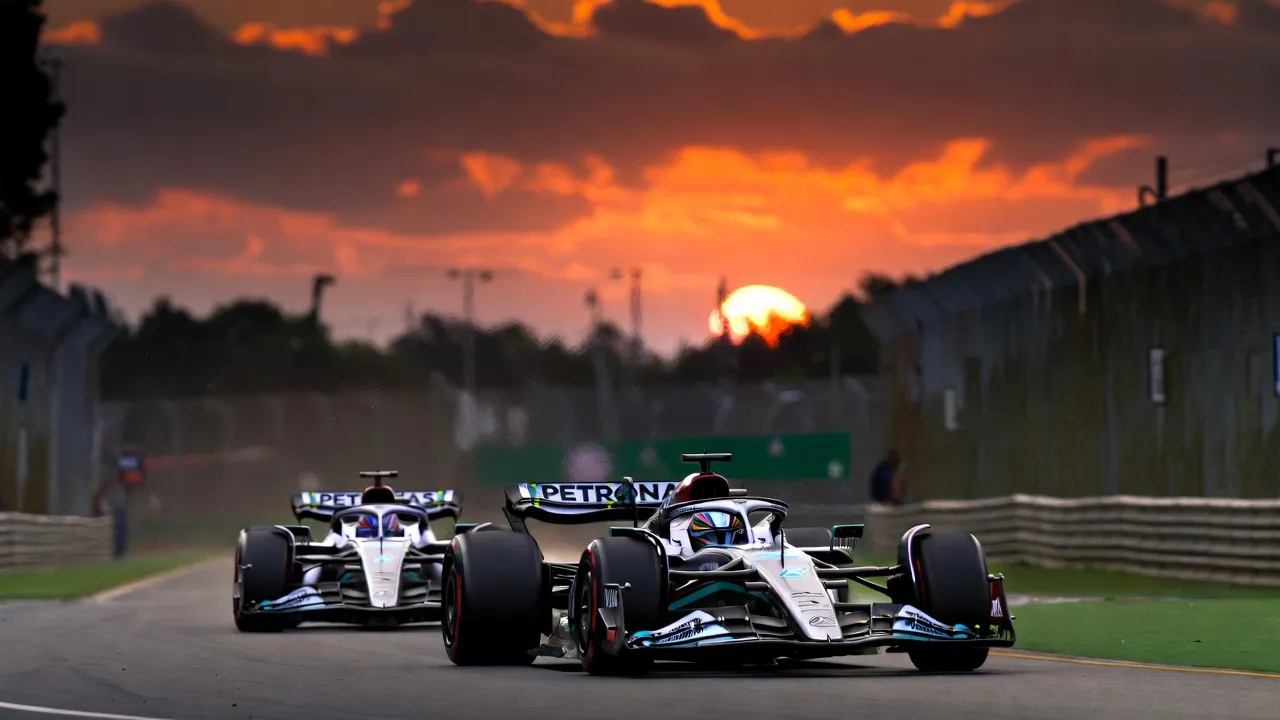
George Russell led from pole but it wasn't a processional victory. Leclerc took the lead at Turn 1 on the opening lap, and Ferrari looked capable of a different result — until the race was decided not by pace, but by timing.
On Lap 11, Isack Hadjar's Red Bull suffered a catastrophic engine failure. Virtual Safety Car deployed. Mercedes pitted Russell and Antonelli immediately. Ferrari didn't. When Bottas then stopped at the pit lane entrance on Lap 15 and triggered a second VSC, the pit lane was closed for safety reasons — Ferrari's window had closed with them still on old tyres.
When Ferrari finally stopped under normal racing conditions, the time loss was double what it would have been under VSC. Mercedes had executed a clean one-stop medium-hard strategy and built a gap that Leclerc could never close. Russell won by 2.974 seconds from Antonelli. Ferrari finished 15 seconds back.
Verstappen: P20 to P6 — but at what cost
Starting from the back after Saturday's MGU-K failure, Verstappen delivered the recovery drive the weekend demanded. Hard tyres at the start, aggressive on strategy, methodical through the field. He finished P6 — 14 positions gained, first points of 2026.
But the number that matters isn't his finishing position. It's the 54 seconds he finished behind Russell. Hadjar, in the same car, was running P6 before his engine exploded on Lap 11. Red Bull has race pace. They don't yet have reliability.
Aston Martin: The $525M that didn't finish
Both Aston Martin cars failed to be classified. Alonso retired on Lap 21, rejoined ten laps down, and was not classified at the finish. Stroll completed 43 laps before retiring. Neither scored a point. The Honda power unit vibrations that Newey described as causing potential nerve damage in drivers were not a pre-season exaggeration — they were a preview of what the first race weekend would look like.
Cadillac and Audi: Debuts with asterisks
Bortoleto scored Audi's first points as a works constructor — P9, one lap down. Pérez finished P16 for Cadillac, three laps down. Bottas retired on Lap 15. Hulkenberg didn't start. Both teams showed they exist. Neither showed they can compete — yet.
ECONOMIC IMPACT
Mercedes scored maximum points — 44 between Russell and Antonelli. Ferrari took 27. The constructors' gap after one race is already 17 points. In a season where prize money tiers are determined by final constructors' standing, that early cushion has compounding value across 24 races.
Verstappen's P6 delivered 8 points from a weekend that could have been zero. The damage control was real — but so was the cost. One unreliable power unit in qualifying, one catastrophic engine failure for Hadjar in the race. Red Bull leaves Melbourne with points but without answers.
Aston Martin leaves with nothing. Zero points, two non-classified cars, and a $525M program that has yet to complete a race weekend. The next question isn't whether they can win — it's whether they can finish in China.
THE FRAMEWORK
One race is one data point. But the data point is unambiguous: Mercedes has a power unit advantage, an organizational advantage, and a strategic execution advantage. Ferrari is the closest challenger on race pace — Hamilton and Leclerc were within 16 seconds of the winner. McLaren lost Piastri before the lights went out and Norris finished fifth, 51 seconds back.
The 2026 hierarchy after Round 1: Mercedes. Then a gap. Then everyone else figuring out reliability.
PADDOCKINTEL VERDICT
Russell didn't just win the Australian Grand Prix. He won it with a VSC pit stop Mercedes read faster than Ferrari, on tyres that lasted 35+ laps, in a car rebuilt from a crash 18 hours earlier. That's not luck. That's an organization that has been preparing for 2026 longer and better than anyone else on the grid. China is in seven days. The gap isn't closing that fast.
SOURCES (Las buscamos juntos ahora para verificar antes de publicar)