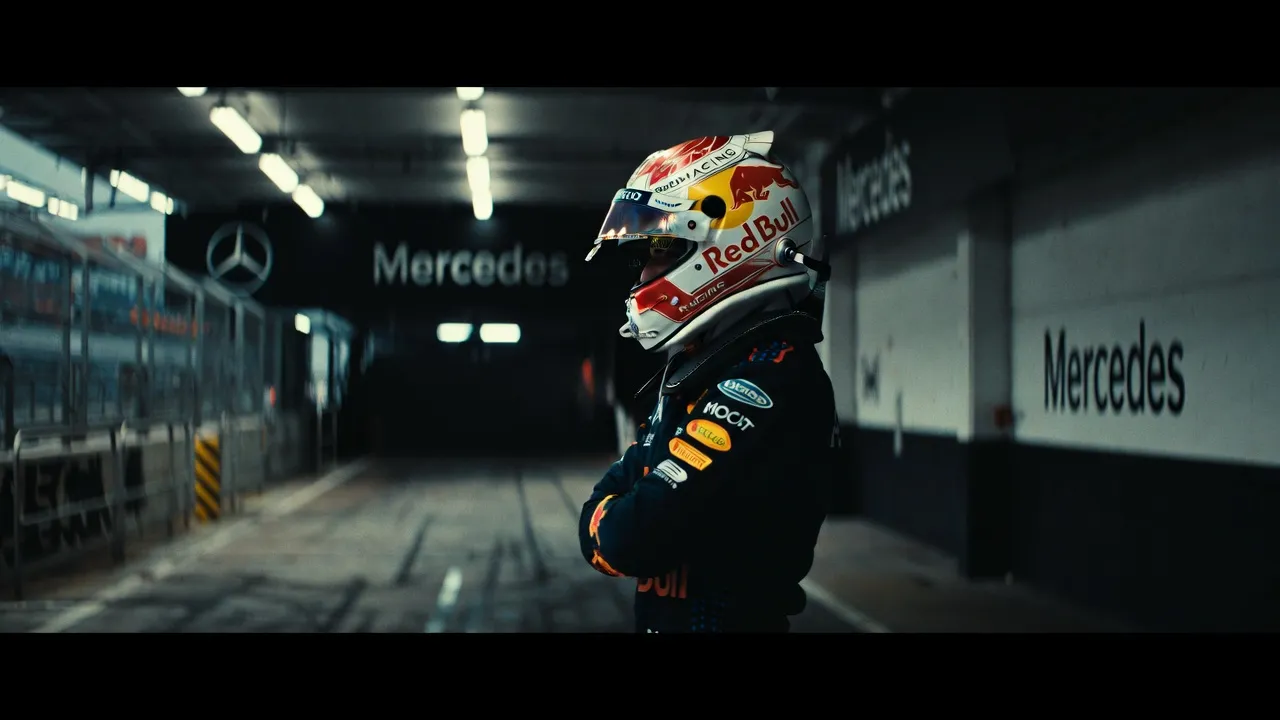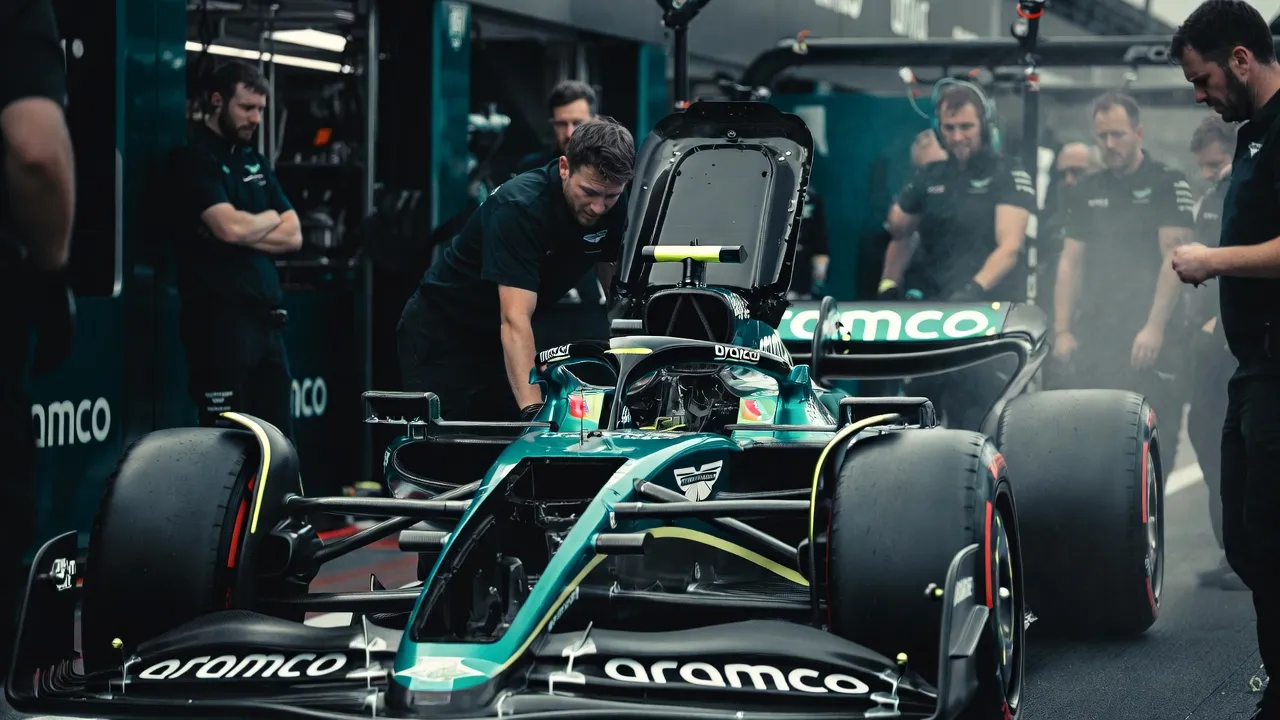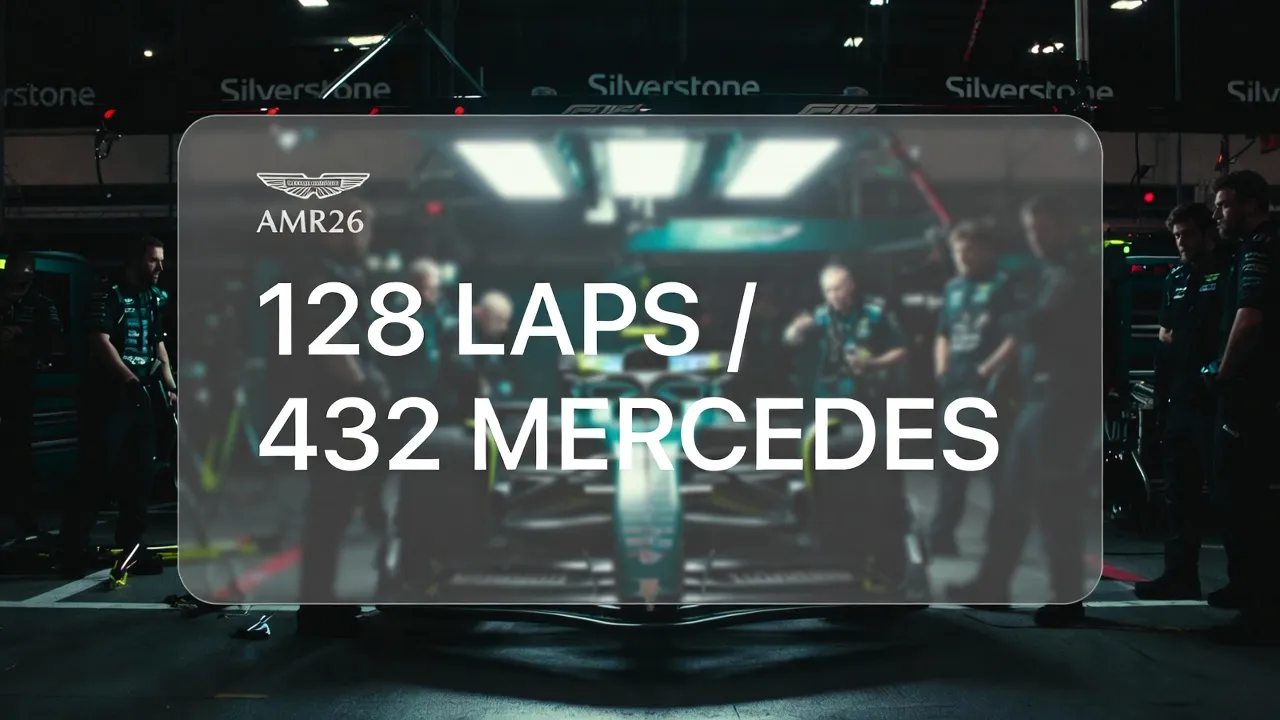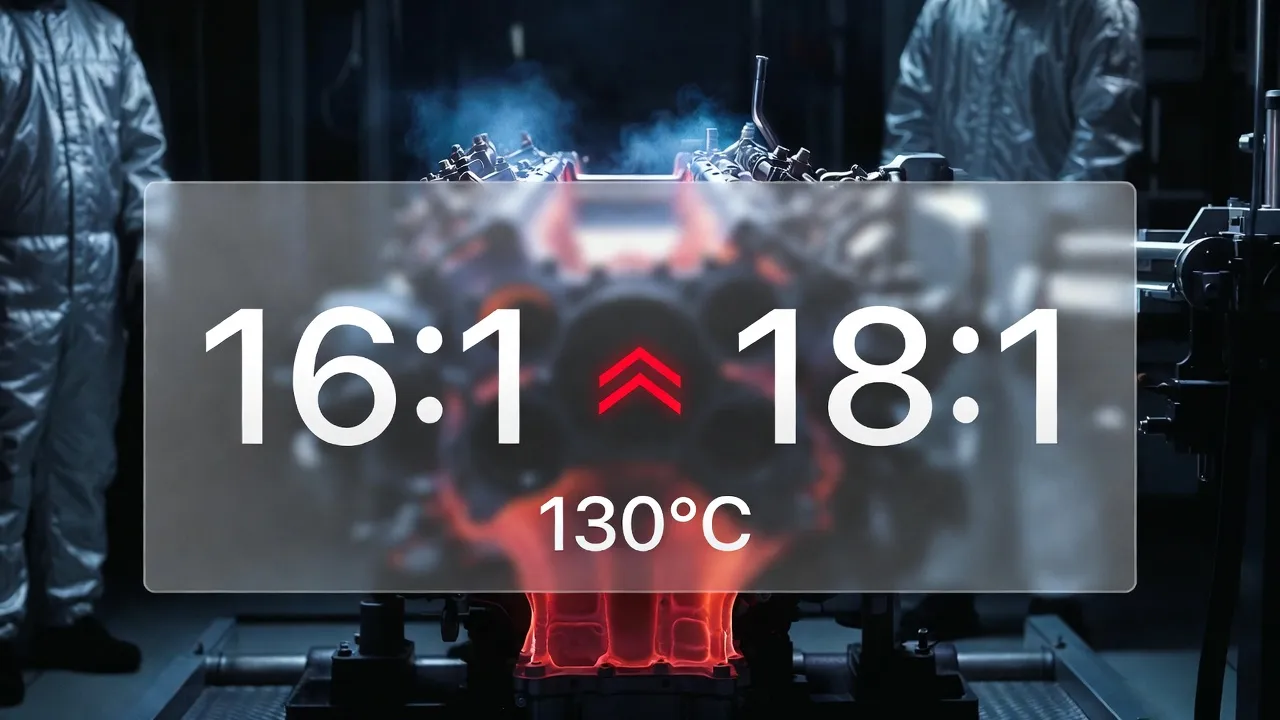
- 01 The Loophole Mercedes Built How 16:1 cold became 18:1 hot — and what it was worth in BHP →
- 02 How Four Manufacturers Defeated One The political mechanics of the FIA vote — and why Red Bull switched sides →
- 03 The 7-Race Window: What It's Worth in Dollars Prize money modelling for Melbourne → Monaco before the June 1 cut-off →
- 04 The 2027 Problem Nobody Is Talking About Why hot-only measurement from 2027 kills the innovation permanently →
- 05 PaddockIntel Verdict Mercedes won the engineering war. The other four won everything else. →
Mercedes arrived at Bahrain pre-season testing as the team everyone expected to dominate 2026. Their W16 power unit was described by rivals as having a significant thermal advantage — a compression ratio that was legal on paper but exploited a gap between how the regulation was written and how physics actually works at operating temperature. By Saturday February 28, the FIA had closed that gap. The vote was 4-1. The window closes June 1.
The paddock is framing this as a regulatory controversy. PaddockIntel is framing it as a financial one. The seven races Mercedes gets to run with their advantage intact have a specific dollar value — and so does the permanent loss of that innovation from 2027 onwards.
The Loophole Mercedes Built
The 2026 technical regulations set the geometric compression ratio limit at 16:1. This was deliberately lower than the previous 18:1 limit — one of the FIA's stated goals for the new power unit era was to attract new manufacturers by reducing the metallurgical complexity of building a competitive engine.[1]
The regulation specified that measurements would be taken at ambient temperature — when the engine is cold. Mercedes' engineers identified a consequence of basic thermodynamics: metal expands when heated. An engine measured at 16:1 cold will have a different effective compression ratio when running at 130°C operating temperature. The FIA's rulebook had not accounted for this.
Engine at rest, ambient temp
Compliant ✓
Engine at race temperature
Not measured ✗
Verstappen estimate
Competitive delta
Before June 1 cut-off
Rival teams — specifically Ferrari, Honda (Aston Martin), and Audi — alerted the FIA to what they believed was an unintended loophole. Red Bull's engine chief Ben Hodgkinson initially called it "a lot of noise about nothing" and sided with Mercedes. Verstappen, however, was characteristically direct, putting the advantage at 20-30 BHP.[2] FIA single-seater director Nikolas Tombazis later said the real figure was nowhere near that level — but acknowledged the ambiguity in the regulation was real.
Toto Wolff's public position shifted over three weeks from "this would be quite damaging for our performance" to "it doesn't change anything for us." That trajectory tells you more than either statement did individually. As we covered in our original thermal expansion analysis, this loophole had been visible in Mercedes' design philosophy since Barcelona shakedown.
How Four Manufacturers Defeated One
F1's regulatory process requires a super-majority to amend technical regulations mid-season. The initial proposal — brought to the F1 Commission during Bahrain testing — would have required six votes from the seven eligible parties (five manufacturers, F1, and the FIA). Mercedes would have been powerless to block it unless either F1 or the FIA sided with them.
What actually happened was more interesting. The rival manufacturers rejected the first proposal — not because they wanted to protect Mercedes, but because they objected to dual measurement (both cold and hot conditions) remaining in force permanently. That would have left Mercedes with a reduced but still existing advantage indefinitely. The compromise that passed is significantly more aggressive.
Led opposition
Backed change
Backed change
Then supported
Accepted result
Red Bull's position change is the most revealing detail of this entire saga. Hodgkinson sided with Mercedes in January. By February, Red Bull's team principal Laurent Mekies was publicly neutral: "we don't really mind if the regs goes left or if the regs goes right." That is not neutrality — that is a team that decided the cost of blocking the change was higher than the cost of supporting it. The Verstappen exit clause context matters here: Red Bull cannot afford Mercedes to have a structural engine advantage in the first half of the season.
The 7-Race Window: What It's Worth in Dollars
June 1 falls between Race 7 (Monaco, June 7) and Race 8 (Montreal, June 22). The new test applies from Race 8 onward. This means Mercedes and their customer teams — George Russell, Kimi Antonelli, and the Williams and Kick Sauber customer cars — get seven races of unrestricted advantage before the rule tightens.
The financial stakes of those seven races are significant. As we modelled in our Bahrain lap count analysis, the difference between finishing P1 and P3 in the constructors' championship at season end is approximately $35-45 million in prize money. Seven races at 0.3 seconds per lap of advantage — if Verstappen's estimate is even directionally correct — represents a meaningful head-start in that constructors' battle.
The prize money model at PaddockIntel estimates that seven races of consistent podium-level performance — driven in part by a power unit advantage — could be worth $15-25 million in additional constructors' prize money relative to a scenario where the advantage was closed from Race 1. That is not the total prize money; that is the delta created by seven races of unrestricted thermal advantage before the field adjusts.
Mercedes' customer teams benefit equally. Williams and Kick Sauber, both running Mercedes power units, also receive the advantage through Race 7 — potentially lifting their constructors' standings and prize money distributions beyond what their chassis performance alone would generate.
The 2027 Problem Nobody Is Talking About
The June 1 deadline has dominated the coverage. The more significant clause is buried in the fine print of the revised regulation: from 2027 onwards, compression ratio measurements will only be taken in hot conditions (130°C). There will be no dual measurement system. No cold baseline. Just hot.
This means Mercedes cannot simply comply with the new dual measurement from June 2026 and then revert to an optimised cold-measured design in 2027. The regulation permanently adopts the operating temperature measurement as the sole standard. The loophole does not just get closed — it gets welded shut.
"It doesn't change anything for us, whether we stay like this or whether we change to the new regulations."
— Toto Wolff, Bahrain pre-season testing[1]
That statement is either genuine — in which case the advantage was smaller than rivals feared — or it is the most composed piece of expectation management in recent F1 history. The $6 billion Mercedes valuation thesis depends on the team winning constructors' championships, which depends on engines, which now has a harder ceiling from 2027. Wolff has spent years engineering regulatory moats. This one got filled in faster than any before it.
For Red Bull and Ferrari specifically, the 2027 hot-only measurement is the real prize. Under the dual-measurement system that was originally proposed, Mercedes would have retained some advantage — reduced, but real. By negotiating to hot-only from 2027, the rival manufacturers achieved something more valuable than closing the current gap: they eliminated the possibility of a structural Mercedes engine advantage in the regulation cycle that will define the sport through 2030.
PaddockIntel Verdict
Mercedes built something brilliant. Their engineers found a gap in the regulation that was technically legal, thermodynamically sound, and potentially worth 20-30 BHP at operating temperature. In any other industry, that is a competitive advantage you protect for years.
In F1, four rival manufacturers voted it away in three weeks.
The outcome has a clear financial shape: Mercedes gets seven races of advantage worth an estimated $15-25 million in constructors' prize money delta. In exchange, they permanently lose a design philosophy that could have compounded across four seasons of a stable regulatory cycle. The trade is worse than it looks in the short term.
The deeper story is what this reveals about F1's regulatory architecture. Technical innovation in F1 is not protected by patents or trade secrets — it is governed by a voting system where your rivals sit on the committee. Mercedes' W16 thermal engineering was exceptional. The governance structure ensured it couldn't stay exceptional for long.
Toto Wolff called it "a storm in a teacup." He was right about the storm. The teacup is Melbourne to Monaco. What comes after — 17 races, a new measurement standard, and a 2027 engine cycle with no thermal loophole available — is where the real championship gets decided.
-
1
Sky Sports F1 — FIA confirms mid-season rule change to power-unit regulations skysports.com
-
2
GPFans — FIA announce compression ratio decision after Mercedes engine controversy gpfans.com
-
3
RacingNews365 — F1 2026 power unit saga takes fresh twist — revised compromise explained racingnews365.com
-
4
RacingNews365 — FIA adjust F1 regulations after Mercedes engine controversy racingnews365.com
-
5
PaddockIntel — The Thermal Expansion: When 16:1 Becomes 18:1 in the Heat of the Moment paddockintel.com
-
6
PaddockIntel — Bahrain 2026: What the Lap Counts Actually Mean in Melbourne Prize Money paddockintel.com
-
7
PaddockIntel — The $6 Billion Shield: How the Wolff Dynasty Decoupled Profit from Performance paddockintel.com