The FIA changed qualifying rules for the Japanese Grand Prix hours before cars hit the track. The maximum permitted energy recharge per lap in qualifying was cut from 9.0 MJ to 8.0 MJ, following unanimous agreement from all five power unit manufacturers.
The statement called it a "targeted refinement." What it actually is: the governing body reversing a position it held as recently as last week.
Why the FIA Changed Course 12 Hours Before FP1
After the Chinese Grand Prix, F1's technical chiefs met and reached a consensus: qualifying needed fixing, but not yet. The plan was to address energy management rules ahead of Miami in May.
That plan lasted ten days.
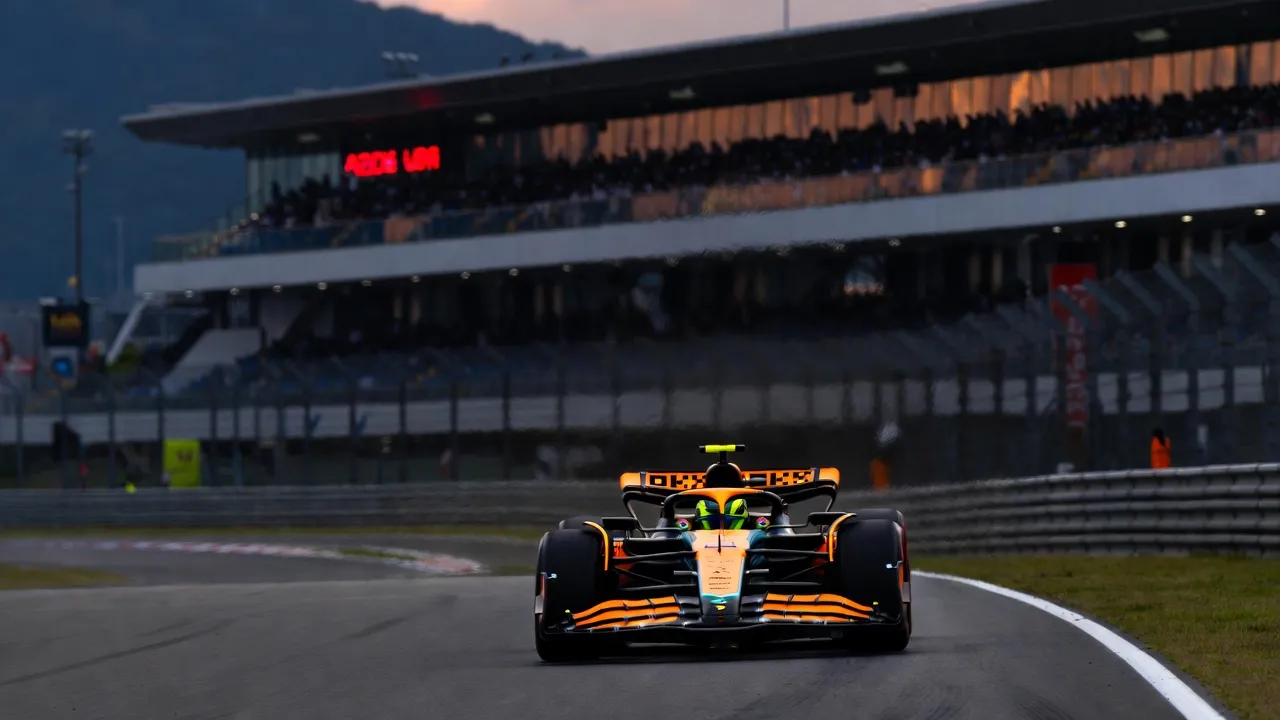
Suzuka is what engineers call an "energy-starved" circuit — few heavy braking zones mean limited opportunity to recharge the battery naturally. The FIA's own simulations apparently confirmed what the paddock already feared: a qualifying session dominated by lift-and-coast tactics at one of the most iconic circuits on the calendar, on Honda's home race weekend, in front of 266,000 fans who paid to watch drivers push to the limit.
The optics of that were untenable. So the rules changed.
What 1 MJ Actually Means on a Lap
The reduction from 9MJ to 8MJ sounds minor. It isn't. According to sources cited by The Race, the drop should reduce the need for super clipping by up to four seconds per lap at Suzuka. Four seconds of unnatural driving, gone — in theory.
The flip side: cars will carry less total energy per lap. Oliver Bearman put it plainly: "It just means we have less energy because we're losing one megajoule compared to what we had on the sim." Less lift-and-coast, but also less deployment. Whether that trade-off delivers the qualifying spectacle F1 needs remains to be seen on Saturday.
Who Gains and Who Loses From the Change
Mercedes and Ferrari — both strong in hybrid efficiency — had built qualifying advantages partly around superior energy management. Reducing the recharge limit narrows the window where that expertise compounds. In theory, the change levels the playing field slightly.
In practice, Charles Leclerc was direct: "I don't think it will be a game-changer."
Red Bull and Honda, who have struggled most with energy deployment consistency in 2026, stand to benefit the most from a rule that reduces the penalty for inefficient harvesting. Whether that translates to grid positions at Suzuka — Honda's home circuit — is the question worth watching in qualifying.
The Real Cost of Mid-Season Rule Changes
The FIA described the first two rounds as "operationally successful." That framing is doing a lot of work.
Rule changes mid-weekend are not free. Every team that built simulation models around 9MJ for Suzuka now runs with different parameters. Engineering hours spent optimizing for a limit that no longer applies. Setup decisions made on assumptions that changed overnight.
For backmarker teams operating near the cost cap, those hours matter. For Honda specifically, whose $415M engine investment is being evaluated in real time at their home race, the last thing needed is a regulatory variable introduced 12 hours before track action.
The FIA has signaled that further discussions are scheduled during the five-week break ahead of Miami. What those discussions produce will define whether 2026 qualifying becomes a genuine performance showcase — or a series of incremental patches applied under pressure.
🔴 The business of F1 moves faster than the rulebook.
What to Watch in Suzuka Qualifying
Saturday's session is the first real test of whether the 8MJ change delivers. The metrics to watch: gap between Mercedes and Ferrari vs. Australia and China, Red Bull's ability to close relative to their race pace deficit, and whether Leclerc's "not a game-changer" assessment proves correct.
The data will be more interesting than the FIA statement.
FUENTES:
- The Race — Last-minute Japanese GP rule change to combat energy-saving fears
- Formula1.com — FIA announce energy management tweaks ahead of Japanese Grand Prix
- Sky Sports — F1 drivers react to Suzuka qualifying rule tweak
- PlanetF1 — Energy fears prompt FIA rule change ahead of Japanese GP
- Autosport — FIA cuts energy recovery limit for Japanese GP qualifying
INTERNAL LINKS:
- "Honda's $415M engine investment" → Honda F1 Engine Crisis 2026: Suzuka Deadline & $415M Cost
- "Bahrain and Saudi cancellations" → F1's Stranded Equipment: The Hidden Cost of Cancelling Bahrain and Saudi Arabia
- "266,000 fans" → Suzuka 2026: What the Japanese Grand Prix Actually Costs