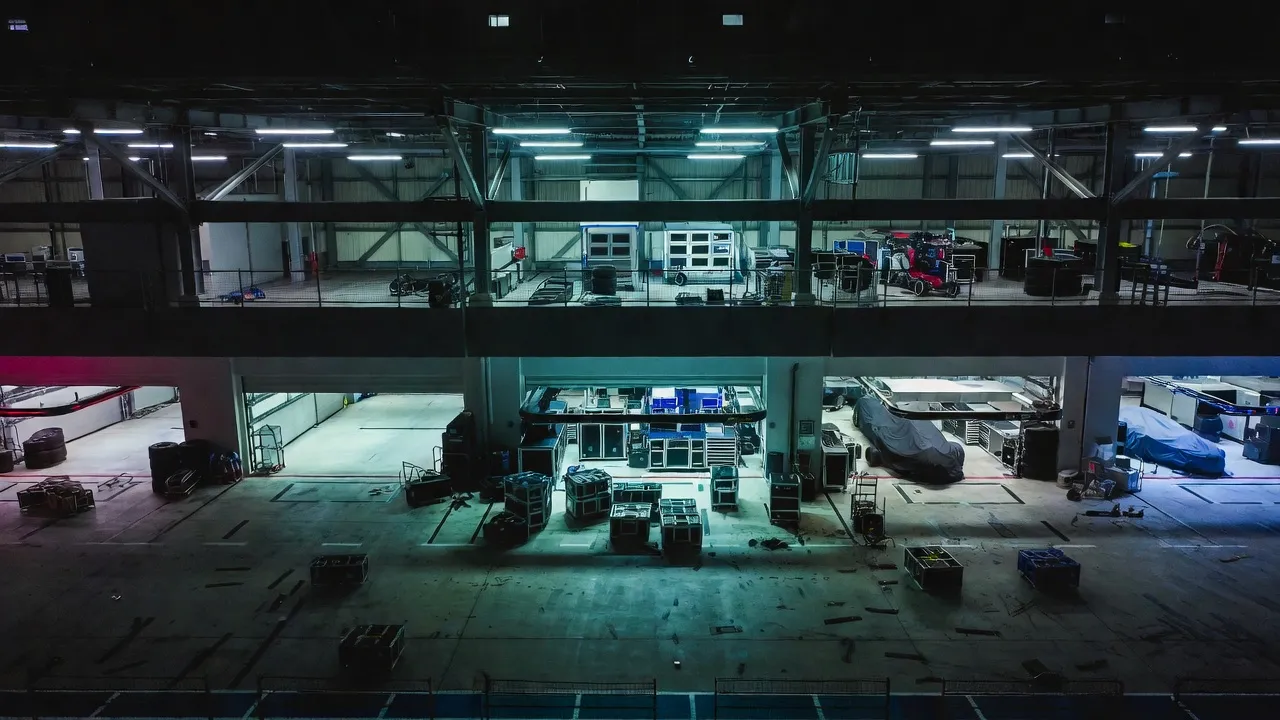
The headline number from cancelling the Bahrain and Saudi Arabian Grands Prix is $190–200 million in lost revenue and $80 million in EBITDA, per a Guggenheim Partners analyst note. That figure has been widely reported. What hasn't been quantified is the secondary problem sitting in a paddock outside Sakhir right now: hundreds of tonnes of Formula 1 equipment in a conflict zone, with no confirmed extraction plan.
Three Layers of Abandoned Assets
The problem started weeks before the official cancellation. On February 28, Pirelli's planned two-day wet tyre test at Bahrain International Circuit — using mule cars supplied by Mercedes and McLaren — was cancelled mid-setup after Iranian forces struck a US naval facility in Manama, approximately 20km from the circuit. Pirelli, McLaren, and Mercedes left additional equipment behind after that test was abandoned once hostilities began.
That was layer one. Layer two was already there: all ten F1 teams had left sea freight containers and fully assembled garage setups in Sakhir after pre-season testing. Layer three is the rerouting problem post-Japan: freight originally scheduled to leave Suzuka immediately after the Japanese Grand Prix and travel directly to Bahrain must now be redirected to the United States for Miami — dozens of cargo aircraft, hundreds of tonnes of equipment, route redrawn from scratch.
The Insurance Problem Nobody Is Talking About
Getting equipment out isn't simply a logistics decision. Travel advisories and insurance restrictions complicate recovery — some organisations may delay retrieval until it is safe, or choose to replace equipment from other stocks entirely. Replacing rather than recovering has an obvious cost, one that sits squarely within team operating budgets and technically under the cost cap.
Pirelli's situation is distinct. Tyres already at a circuit are unlikely to be reused because of safety and shelf-life restrictions — they are recycled, not transported. These aren't cheap consumables. Full race tyre allocations across an entire field represent significant per-unit costs. They are written off entirely.
The Cost Cap Dimension
Here is where it gets competitively interesting. Teams do have one option on the table: fly their race chassis back to European factories for servicing before shipping them to Miami, a move that falls within the Formula 1 cost cap. That means the stranded asset problem doesn't just create operational headaches — it forces spending decisions that consume regulated budget, budget that would otherwise fund development in a regulation-reset year where every upgrade dollar carries maximum competitive weight.
For a mid-table team already operating close to the cap, the arithmetic is particularly uncomfortable. A smaller outfit absorbs the same logistical disruption as a top team, but with less financial buffer to replace stranded stock or absorb unplanned freight costs.
The Broader Signal
The conflict has already cast a shadow beyond April. Strikes attributed to Iran reached Azerbaijan, Qatar, and the UAE during the opening weeks of hostilities — all three nations host Grands Prix before the 2026 season concludes in December. The equipment sitting in Sakhir right now is not just a logistics invoice. It is a preview of what structural Middle East dependency looks like when geopolitics stops cooperating.
The $200M revenue number is the one that fits in a headline. The operational and competitive cost of what's in those garages has no clean figure yet — which is exactly why it matters.
Sources
- Crash.net — F1 Bahrain, Saudi Arabian GP cancellations confirmed: teams' freight and stranded equipment
- Total Motorsport — Bahrain and Saudi F1 races cancelled: freight rerouting from Suzuka to Miami
- Kym Illman — Middle East F1 races officially cancelled: tyre shelf-life rules, insurance complications
- The National — Formula One counts cost of cancelled Bahrain and Saudi Arabia weekends
- GPFans — F1 loses big: $200M cost of 2026 race cancellations, Guggenheim analyst note