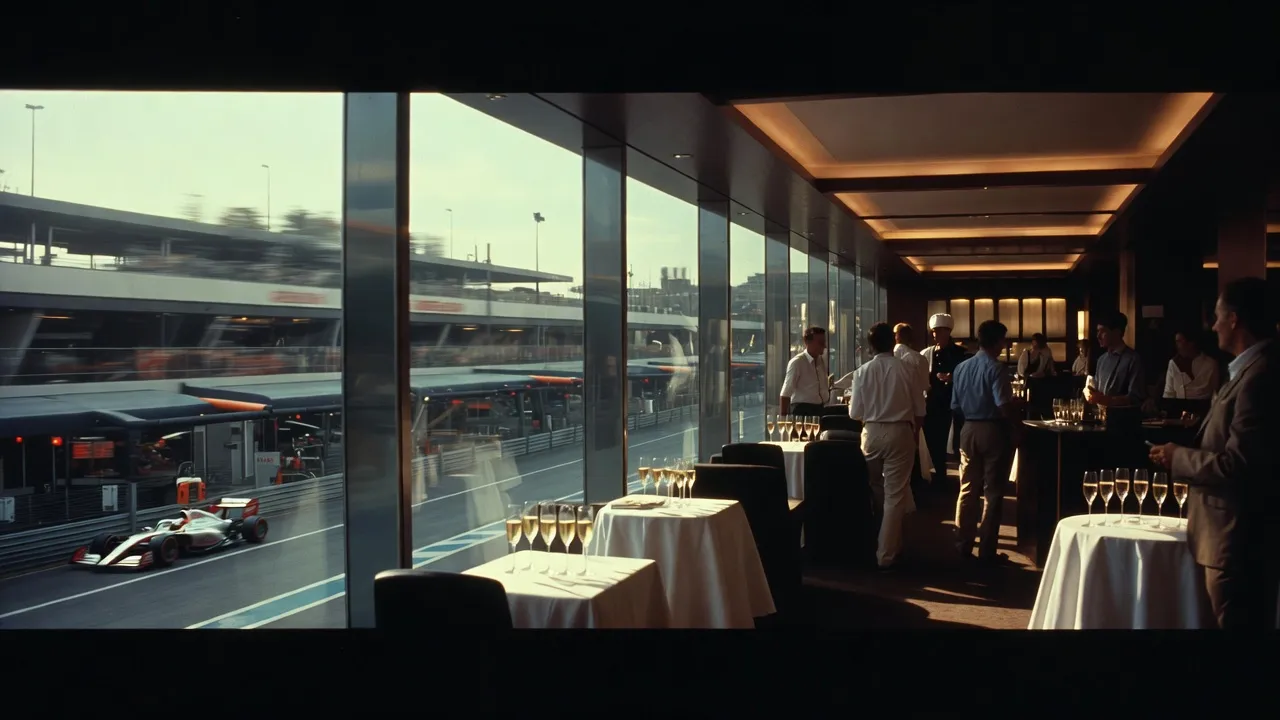
— THE ROOM —
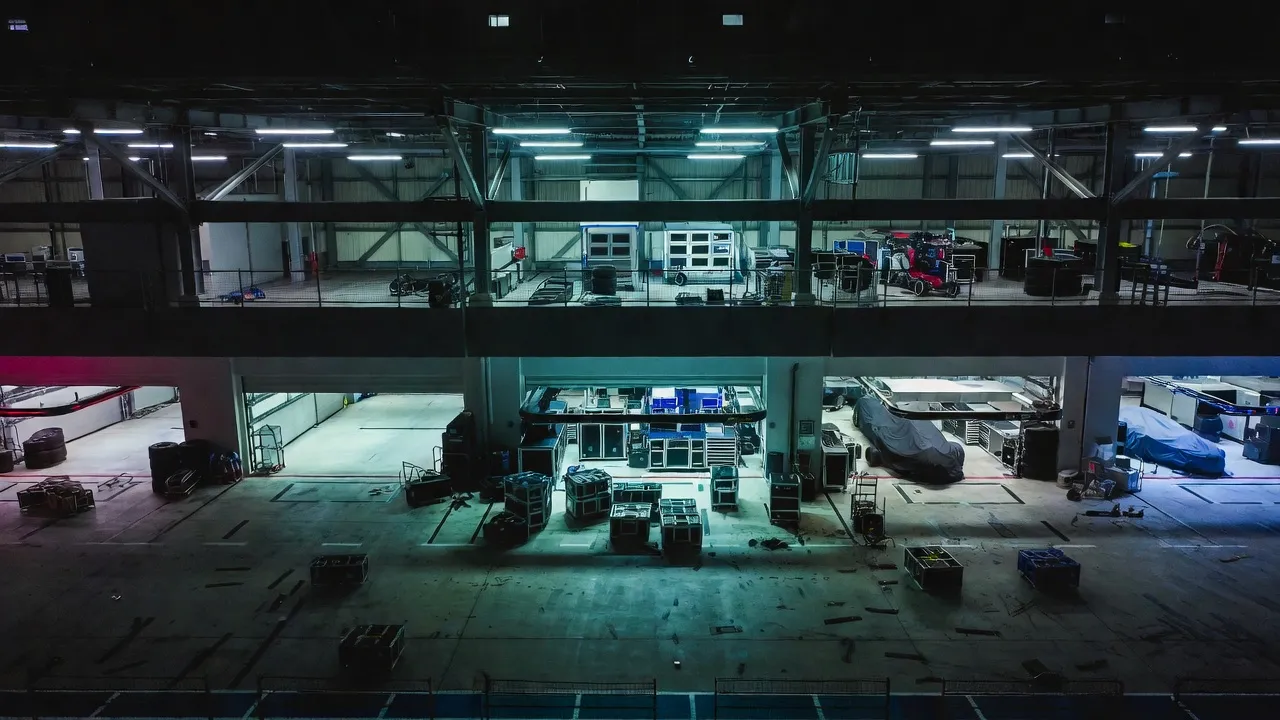
The elevator opens on the second floor of the pit building, and the first thing you notice is not the view. It is the temperature. Climate-controlled air, the kind that costs money to maintain at a circuit where the ambient heat outside is pushing 35 degrees. Then the noise — not the engines, not yet — but the low hum of a room where every conversation sounds like a deal being closed or a relationship being maintained.
This is the Paddock Club. Formula 1's most exclusive address. Situated directly above the team garages at most circuits, it offers something no grandstand ticket, no fan zone, no hospitality package can replicate: proximity without friction. You are close enough to see the mechanics work. Close enough to read the expression on a team principal's face when the strategy call goes wrong. Close enough to feel the vibration of a 1,000-horsepower power unit in your chest when the lights go out.
The food is Michelin-calibre. The bar is open all weekend, champagne included. There are pit lane walks at designated times — a choreographed procession through a space that the rest of the world watches on television. There are driver talks, Q&As, appearances by F1 personalities whose access to the sport is, itself, a form of currency.
It is, by any measure, a remarkable product. And like all remarkable products, the price is the point.
— THE PRICE TAG BY CIRCUIT —
Paddock Club tickets are sold per person, per weekend — three days of access bundled into a single figure that varies significantly depending on where Formula 1 is racing.
The range for 2026, based on verified pricing from official resellers:
| Circuit | Country | Paddock Club (3-day, per person) |
|---|---|---|
| Azerbaijan GP | Baku | from £4,728 (~$5,900) |
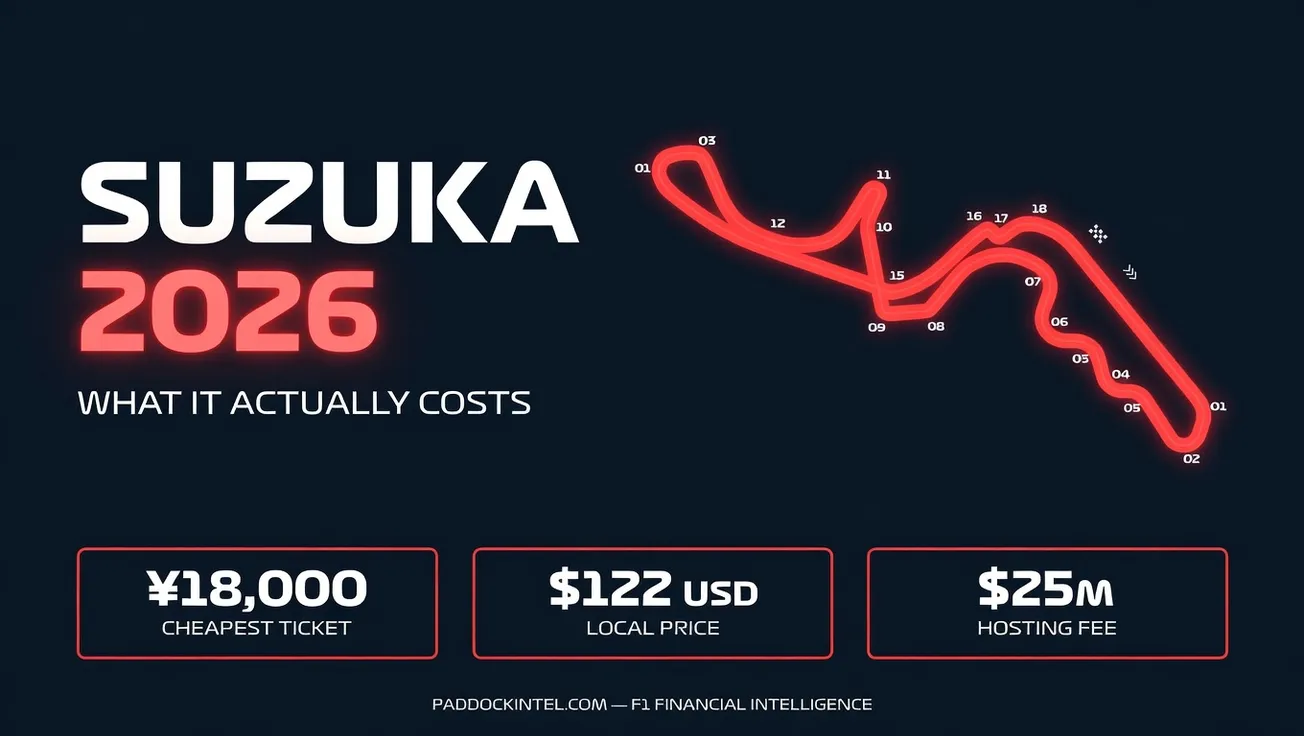
| Japanese GP | Suzuka | from $5,500 |
| Spanish GP | Barcelona | from £5,200 (~$6,500) |
| British GP | Silverstone | from £6,800 (~$8,500) |
| Miami GP | Miami | from $7,500 |
| Monaco GP | Monaco | from £8,500 (~$10,600) |
| US GP | Austin | from $8,000 |
| Las Vegas GP | Las Vegas | from $9,500 — suites to $15,000 |
All figures are per-person weekend packages. Team Paddock Club experiences (Ferrari, Red Bull, Mercedes) carry a premium above standard pricing. Source: Motorsport Tickets, F1 Experiences, official circuit resellers.
The cheapest seat in the room costs more than most people's monthly rent. The most expensive — a private suite at Las Vegas — costs more than a used car.
But the number that matters most is not the one on the price tag. It is the one that answers a different question entirely: who is actually paying for it?
— WHO'S ACTUALLY IN THE ROOM —
Here is what the Paddock Club looks like from the outside: wealthy Formula 1 fans treating themselves to the ultimate race weekend. Here is what it looks like from the inside: a corporate hospitality operation disguised as a fan experience.
The majority of Paddock Club guests on any given race weekend are not there because they bought a ticket. They are there because a sponsor bought them tickets.
When Oracle signs a title sponsorship deal with Red Bull Racing — estimated at $100 million annually — the contract includes a defined allocation of Paddock Club access. Hospitality rights are a standard line item in every major F1 sponsorship agreement. The sponsor uses those tickets to bring clients, reward employees, and close deals in an environment that, by design, is impossible to replicate anywhere else in the world.
The same applies to Petronas at Mercedes. To LVMH at their various team partnerships. To Aramco, to Heineken, to every brand whose logo appears on a car moving at 300 kilometres per hour. The Paddock Club is not just a hospitality product — it is a contractual deliverable built into the sport's commercial architecture.
The fan who walks in having paid $7,500 of their own money is sharing a room with a client of a Fortune 500 company who has never watched a qualifying session in their life but has just been handed a wristband as a reward for closing a $20 million software deal.
That is not a criticism. It is the economy of access — and understanding it changes everything about how you evaluate the experience.
— WHO'S REALLY PAYING —
The Paddock Club is a Liberty Media product. Formula 1's parent company controls the hospitality infrastructure at every circuit, operating it as a premium revenue stream that sits alongside broadcast rights and race hosting fees in the sport's commercial model.
The revenue flows in multiple directions simultaneously. Liberty Media captures the headline hospitality fee. The circuit promoter takes a share tied to their hosting agreement. Official resellers — of which there are only eight globally authorized distributors — earn their margin on top. And above all, the sponsors who exercise their contractual hospitality rights are effectively pre-purchasing those seats months or years in advance as part of deals that dwarf the face value of any individual ticket.
The newest evolution of this model arrived in 2026 with House 44 — a collaboration between the F1 Paddock Club and Soho House, developed with Lewis Hamilton. Trackside views, bespoke suite interiors, and exclusive paddock access delivered through the aesthetic language of a members' club rather than a corporate hospitality tent. It is the most explicit signal yet of where the Paddock Club is heading: away from the transactional and toward the aspirational. Away from the conference room and toward the lifestyle destination.
Soho House's global membership base — predominantly high-net-worth creatives and professionals in their 30s and 40s — is exactly the demographic that Formula 1 has been cultivating since Liberty Media acquired the sport in 2017. House 44 is not a hospitality product. It is a membership extension. And membership, unlike a ticket, implies return.
— THE PADDOCKINTEL VERDICT —
The Paddock Club is worth it. But not for the reasons most people cite when they ask the question.
It is not worth it for the food, though it is exceptional. It is not worth it because of the open bar, though champagne at the pit lane level is a specific kind of pleasure. It is not even worth it because of the pit-lane walk, which, in practice, is a carefully managed procession through a space far more crowded than television makes it appear.
It is worth it because of what it sells that no other ticket can: the experience of being inside the machine rather than watching it from outside.
For the corporate guest, the value is relational — deals made in rooms like this are made in minutes that would take months to engineer elsewhere. For the genuine fan, the value is sensory and emotional — the understanding of what Formula 1 actually is, at the level where it operates, is permanently altered by proximity to it.
For the aspirational reader who has never been but wants to understand: the Paddock Club exists because Formula 1 understood, long before most sports did, that the real product was never the race. The real product was access. And access, priced correctly, never goes on sale.
The $5,000 seat is not expensive. It is deliberately priced to exclude, which is precisely what makes it worth having.
SOURCES