Formula 1 spent $324 million on driver salaries in 2026. That number gets published, analyzed, and debated every season.
The number nobody publishes: what the other 50,000 people in the F1 ecosystem actually earn.
Behind every driver on the grid is a team of 500 to 1,000 engineers, strategists, aerodynamicists, data scientists, and mechanics. Their salaries are not subject to any cap. Their expertise is the real competitive advantage. And their market is more ruthless than any driver transfer.
This is the full breakdown.
How Much Does an F1 Engineer Earn in 2026?
F1 teams do not publish salary ranges. The figures below are compiled from Fluid Jobs, F1 Salaries, Glassdoor submissions, and industry reporting — cross-referenced across multiple sources. They represent estimated ranges, not confirmed figures.
The salary structure in F1 broadly divides into two tracks: factory engineers and trackside engineers.
Factory engineers work on car development — aerodynamics, design, simulation, and software. They influence results over weeks and months. Trackside engineers work race weekends, making live decisions on car behaviour, strategy, and driver communication. They influence results in real time.
Trackside roles pay more, carry more pressure, and are harder to replace.
| Role | Estimated Annual Salary |
|---|---|
| Graduate / Junior Engineer | $30,000 – $80,000 |
| Performance Engineer (mid) | $80,000 – $130,000 |
| Senior Race Engineer | $130,000 – $200,000 |
| Chief Race Engineer | $200,000 – $350,000 |
| Head of Aerodynamics | $300,000 – $500,000 |
| Technical Director | $500,000 – $1,000,000+ |
| Team Principal | $1,000,000 – $10,000,000+ |
| Adrian Newey | $30,000,000+ |
All figures are estimates. F1 teams do not disclose individual salaries. Sources: Fluid Jobs 2025 salary survey, F1 Salaries, industry reporting.
What Is Adrian Newey's Salary at Aston Martin?
Adrian Newey is the highest-paid non-driver employee in Formula 1 history — and almost certainly the highest-paid technical employee in any sport.
Multiple outlets, including the BBC, Sky Sports, and RacingNews365, reported that Newey's contract with Aston Martin pays a base salary of £20 million annually, rising to £30 million ($39 million) with bonuses, on a five-year deal. He also became a shareholder in the team, with a reported 2.5% stake. Crash.net
Lawrence Stroll described the salary as "a bargain" given Newey's track record of producing title-winning cars. PlanetF1 That assessment is not sentiment — it is a financial calculation. Newey's designs have won 14 Drivers' and 12 Constructors' Championships. The prize money, sponsorship uplift, and franchise value generated by a championship-winning car dwarfs his annual salary.
To put it in perspective: only Max Verstappen and Lewis Hamilton have contracts that exceed Newey's figures — which places him above 18 of the 22 drivers on the current grid. OneFootball
Critically, Newey's salary is almost certainly not part of Aston Martin's budget cap — the regulations state the two highest-paid team members, excluding drivers, are exempt from the spending limit. F1 Oversteer
How Much Do F1 Team Principals Earn?
Team principals sit at the intersection of sport and business — responsible for everything from race strategy to sponsor relationships to driver contracts. Their salaries reflect that scope.
Toto Wolff leads the group at an estimated $7.5 million annually at Mercedes — though his 30% ownership stake in the team means his real financial exposure to Mercedes' success dwarfs his salary. Fred Vasseur at Ferrari earns an estimated $5.3 million. Andrea Stella at McLaren earns approximately $5.5 million. Front Office Sports
| Team Principal | Team | Estimated Salary |
|---|---|---|
| Toto Wolff | Mercedes | $7.5M |
| Fred Vasseur | Ferrari | $5.3M – $7.6M |
| Andrea Stella | McLaren | $5.5M – $7.6M |
| James Vowles | Williams | $5M |
| Laurent Mekies | Red Bull | $1.1M – $1.25M |
| Ayao Komatsu | Haas | $800K – $1M |
| Jonathan Wheatley | Aston Martin | Undisclosed |
Wheatley's salary at Aston Martin has not been publicly reported. Given his 19 years at Red Bull — where he built the operational infrastructure behind four consecutive championships — his market rate would sit significantly above the midfield average.
What Does an F1 Aerodynamicist Earn?
Aerodynamics is where F1 races are won before the season starts. The best aerodynamicists command salaries that reflect that reality.
Average F1 engineer salaries in 2026 range from approximately $30,000 for graduates to over $400,000 for experienced technical directors. F1salaries Within that range, aerodynamicists sit at the premium end — their work directly determines lap time.
A typical aerodynamics career path in F1:
- Graduate CFD Engineer: $40,000 – $70,000
- Mid-level Aerodynamicist: $80,000 – $130,000
- Senior Aerodynamicist: $130,000 – $200,000
- Head of Aerodynamics: $300,000 – $500,000
- Chief Aerodynamicist: $500,000 – $900,000+
The scarcity premium is real. Aerodynamicists and simulation specialists with proven results are hot property — cross-industry talent from aerospace can command strong packages if they can adapt to F1's pace. Las Motorsport
🔴 PaddockIntel covers the business of F1 — the numbers behind the sport that nobody else is reporting. Subscribe for race-by-race analysis, salary data, and financial intelligence from the paddock.
How the Budget Cap Changed F1 Engineer Salaries
This is the part nobody is covering — and it is the most important structural shift in F1's talent market since the hybrid era began.
The 2026 cost cap is $215 million. It covers car development, race operations, and most staff salaries. But it contains three critical exemptions:
- Driver salaries — unlimited
- The top three highest-paid employees — unlimited
- Marketing and commercial staff — unlimited
What's excluded from the cap includes driver salaries and compensation for the top three executives — such as team principal, technical director, and CFO. GoToTheGrid
That means Newey's $30M+ salary costs Aston Martin nothing against the cap. Wolff's $7.5M is similarly exempt. The three most powerful technical minds at any team — whoever they are — operate outside the financial framework that governs everything else.
The result: a two-tier talent market within every F1 team. The top three technical earners are bought at market rate, unconstrained. Everyone below them is subject to cap pressure — teams must balance engineering depth against the $215M ceiling.
Before the cap, Mercedes could employ 20% more engineers than Williams. Now they cannot. But they can still pay their top three technical leaders 10x more than their rivals' equivalents — and they do.
The budget cap levelled the cars. It did not level the brains.
What Happened to Honda's Engineers — and Why It Matters in 2026
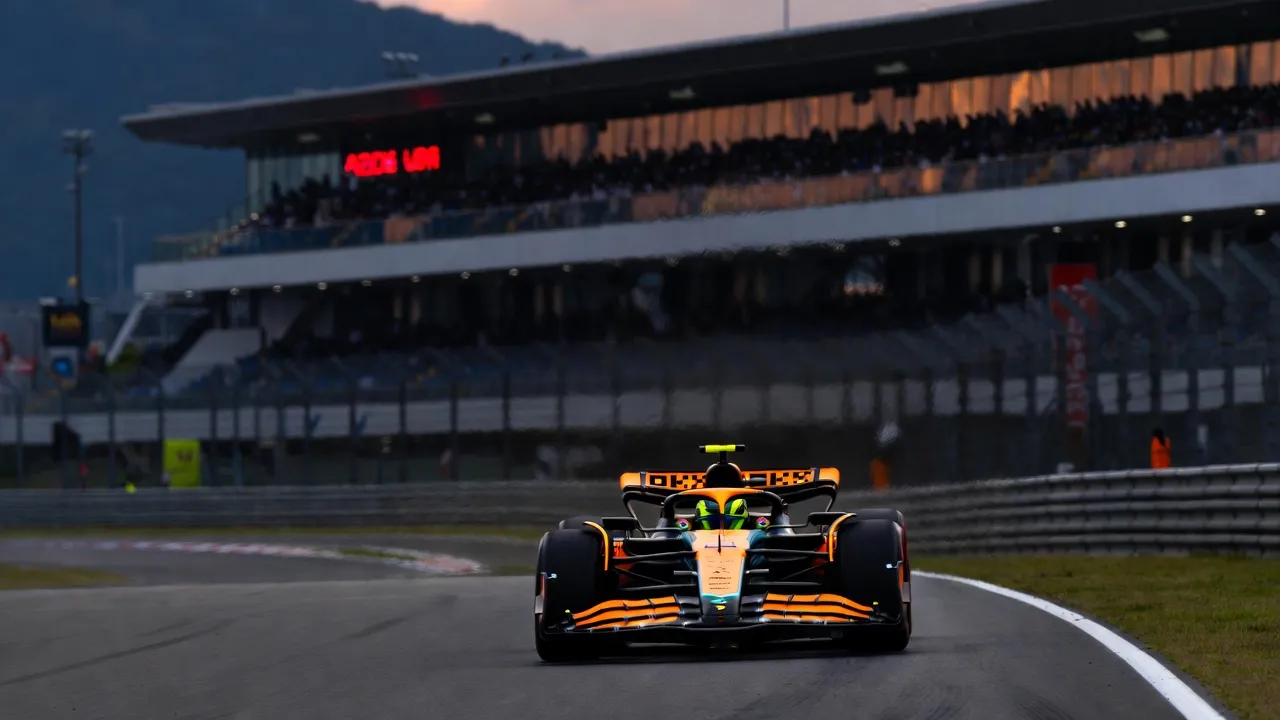
The most vivid illustration of F1's talent market dynamics is happening right now at Suzuka.
Honda officially left Formula 1 after the 2021 season. Their engineering team — the people who built the power units that won Verstappen's first championship — dispersed. Some went to Mercedes. Some to Ferrari. Some left motorsport entirely.
When Honda announced its return in May 2023, it restarted from near zero. Honda's own engine chief acknowledged the late start "handicapped" the project from day one. Adrian Newey revealed the full extent of the problem only after visiting Honda's Sakura facility in November 2025 — discovering that most of the engineers who had built Verstappen's championship-winning engines had left, replaced by staff with little or no Formula 1 experience. paddockintel
$415M in development spend. Zero points from the first two races of 2026. Fernando Alonso is retiring from China due to unmanageable vibrations.
That is not a money problem. That is a talent problem. And no budget cap provision can fix it.
Who Are the Highest-Paid Non-Drivers in F1 2026?
Based on available reporting, the confirmed and estimated top earners outside the driver market:
| Person | Role | Team | Est. Annual |
|---|---|---|---|
| Adrian Newey | TP / Tech Director | Aston Martin | £20M–£30M ($39M) |
| Toto Wolff | Team Principal / CEO | Mercedes | $7.5M + equity |
| Fred Vasseur | Team Principal | Ferrari | $5.3M–$7.6M |
| Andrea Stella | Team Principal | McLaren | $5.5M–$7.6M |
| James Vowles | Team Principal | Williams | ~$5M |
| James Allison | Technical Director | Mercedes | Est. $3M–$5M |
| Pat Fry | Technical Director | Alpine | Est. $2M–$4M |
All figures are estimates from public reporting. F1 teams do not confirm individual salaries. Technical director figures sourced from industry estimates — not officially reported.
PaddockIntel Verdict
The $324M combined driver salary figure that circulates every season is the most visible number in F1's talent economy. It is also the least interesting one.
The real war for talent happens in the layers below — in aerodynamics departments, simulation teams, and strategy rooms where the budget cap creates genuine scarcity. Teams can no longer simply hire their way to a competitive advantage. They must decide whom to pay at market rate and whom to develop internally.
The exemption of the top three earners is where strategy becomes permanent. Aston Martin bet £150M+ over five years on Adrian Newey because one person can restructure a technical department faster than any number of mid-level engineers. Mercedes retained James Allison and invested in their power unit team because the 2026 regulations demanded electrical expertise that no outside hire could provide quickly enough.
Honda proved the inverse. Leave a sport. Lose the institutional knowledge. Spend $415M rebuilding from scratch. Arrive at Suzuka — your home race — with a vibrating engine and a driver who can't feel his hands.
Talent is the only asset in Formula 1 that the budget cap cannot touch. The teams that understand that are winning. The ones that don't are still trying to figure out why the money isn't enough.
This article will be updated as the 2026 season progresses and new salary data becomes available.
FAQs
Q: How much does an F1 engineer earn in 2026? A: F1 engineer salaries in 2026 range from approximately $30,000 for graduates to over $400,000 for senior technical directors. Trackside race engineers typically earn $130,000–$350,000 depending on seniority, while heads of aerodynamics can earn $300,000–$500,000+. Figures are estimates — F1 teams do not disclose salaries publicly.
Q: What is Adrian Newey's salary at Aston Martin? A: Adrian Newey's salary at Aston Martin is reported by the BBC and multiple outlets at up to £30 million ($39M) per year, including bonuses, on a five-year contract. He also holds a reported 2.5% equity stake in the team. His salary is exempt from Aston Martin's budget cap under the rule excluding the top three highest-paid non-driver employees.
Q: How much do F1 team principals earn? A: F1 team principal salaries range from approximately $800,000 to $7.5 million annually. Toto Wolff leads the group at an estimated $7.5M at Mercedes. Fred Vasseur at Ferrari and Andrea Stella at McLaren earn approximately $5.3M–$7.6M. Midfield team principals typically earn $1M–$2M. All figures are estimates from public reporting.
Q: What does an F1 aerodynamicist earn? A: F1 aerodynamicist salaries range from $40,000–$70,000 for graduates to $500,000–$900,000+ for chief aerodynamicists at top teams. Senior aerodynamicists with proven F1 results typically earn $130,000–$200,000. Aerodynamics is one of the most competitive areas in F1, as aerodynamic performance directly affects lap time.
Q: Are F1 engineer salaries subject to the budget cap? A: Most F1 engineer salaries are included within the $215M budget cap for 2026. However, the top three highest-paid non-driver employees at each team are exempt — meaning a technical director, chief aerodynamicist, or team principal at that pay level costs the team nothing against the cap. Driver salaries are also fully exempt.
Q: Why did Honda struggle in 2026 despite a $415M engine investment? A: Honda's 2026 difficulties stem primarily from a talent problem rather than a budget problem. When Honda left F1 after 2021, their experienced engineering team dispersed to rival teams. When Honda restarted development in 2023, they rebuilt with staff who lacked Formula 1 experience — producing a power unit with vibration issues that damaged battery components and caused driver health concerns. The budget cap cannot accelerate the rebuilding of institutional knowledge.