AMR24 Aerodynamic Correlation: The Disconnect Between CFD and Tarmac
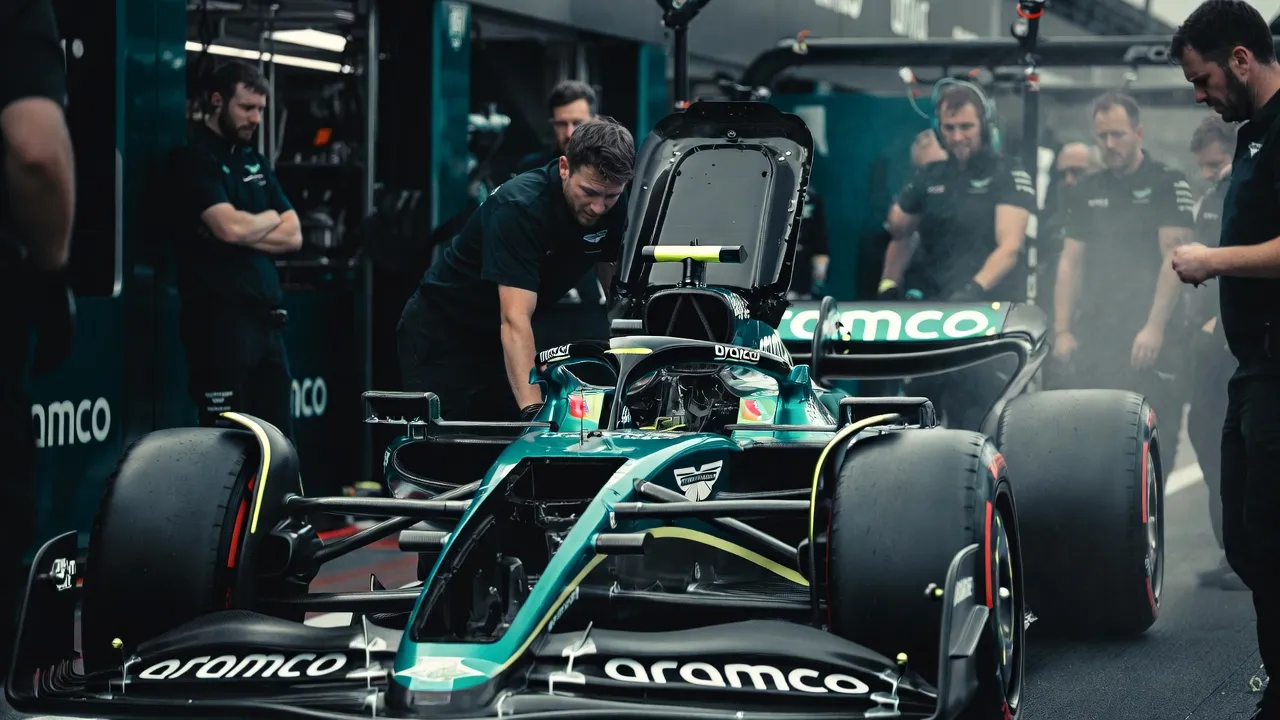
When Lance Stroll stated the AMR24 was "four seconds off the pace," the paddock dismissed it as driver frustration. However, at PaddockIntel, we don't analyze emotions; we audit telemetry. And the numbers confirm an alarming technical reality: Aston Martin is facing an aerodynamic correlation crisis that threatens to invalidate its most significant capital investment of the decade.
The Wind Tunnel Fallacy
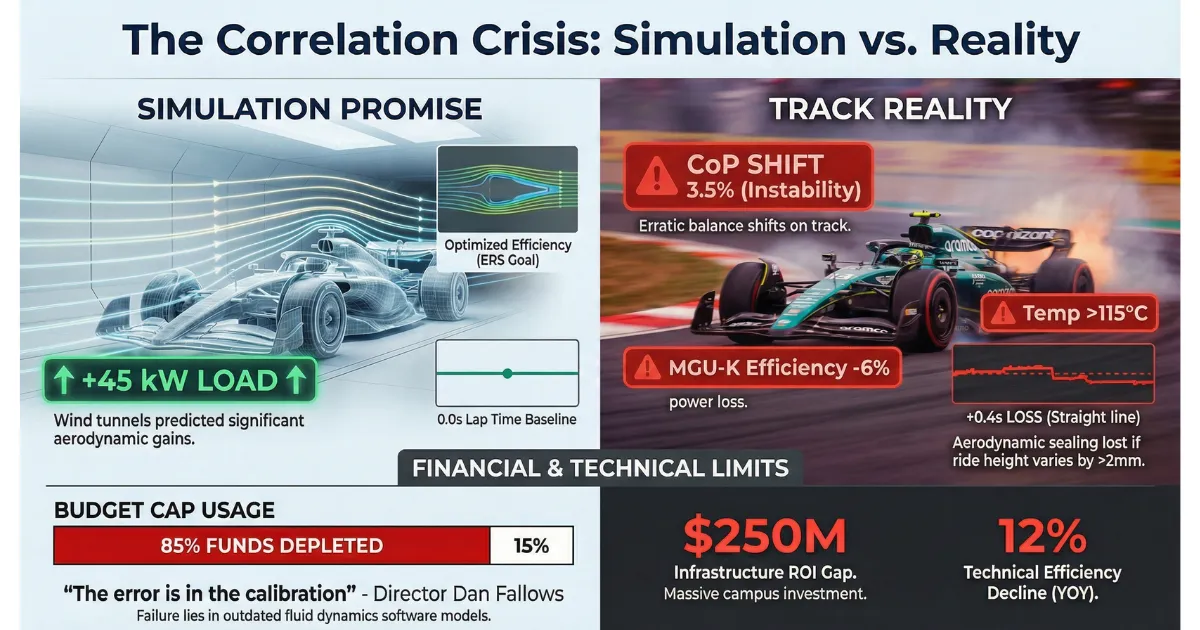
The core of the problem is a severe divergence between simulation and empirical reality. The technical team led by Dan Fallows has operated under simulations promising aerodynamic load increases of 45 kW in high-speed corners. In theory, this should have placed the AMR24 as the second-fastest car in technical sectors.
However, the track tells a different story. Telemetry data reveals Center of Pressure (CoP) instability shifting 3.5% toward the front axle during the critical braking phase. This erratic movement, invisible in the wind tunnel's laminar flow models, destroys driver confidence and exposes the obsolescence of the team's turbulent flow algorithms.
The Cost of Thermal Inefficiency
The deficit is not purely aerodynamic. The aggressive packaging of the AMR24 has compromised power unit efficiency. Under high-load conditions, MGU-K deployment suffers a 6% efficiency drop when ERS environment temperatures exceed 115°C. To mitigate the risk of catastrophic failure, the team is forced to run conservative engine maps, sacrificing 0.4 seconds per lap on straights alone, independent of aerodynamic drag.
The Budget Cap Trap
The financial situation is critical. CapEx analysis indicates Aston Martin has already consumed 85% of its development budget for the current season. With a floor operating window where aerodynamic seal loss occurs when 'ride height' varies by more than 2mm, the team needs a radical floor redesign. However, with only 15% of the budget remaining, the engineers' hands are tied.
Comparison Table: Promise vs. Reality
| Technical Metric | Simulation (Tunnel/CFD) | Track Reality (Telemetry) | Delta |
| Load Gain | +45 kW (High Speed) | Inconclusive (Instability) | N/A |
| CoP Stability | Variation < 0.5% | 3.5% Shift (Braking) | CRITICAL |
| ERS Temp | < 100°C sustained | > 115°C in traffic | +15% |
| Technical Efficiency | Projected YoY Increase | 12% Drop vs 2023 | -12% |
Conclusion: New Hardware, Old Software
The $250 million investment in the new technology campus is world-class hardware apparently running 2022 conceptual software. As the data suggests, physics doesn't lie. If the correlation is not resolved through an urgent recalibration of fluid dynamics models, the AMR24 will not be remembered for its speed, but as the most expensive case study on data inefficiency in the modern F1 era.