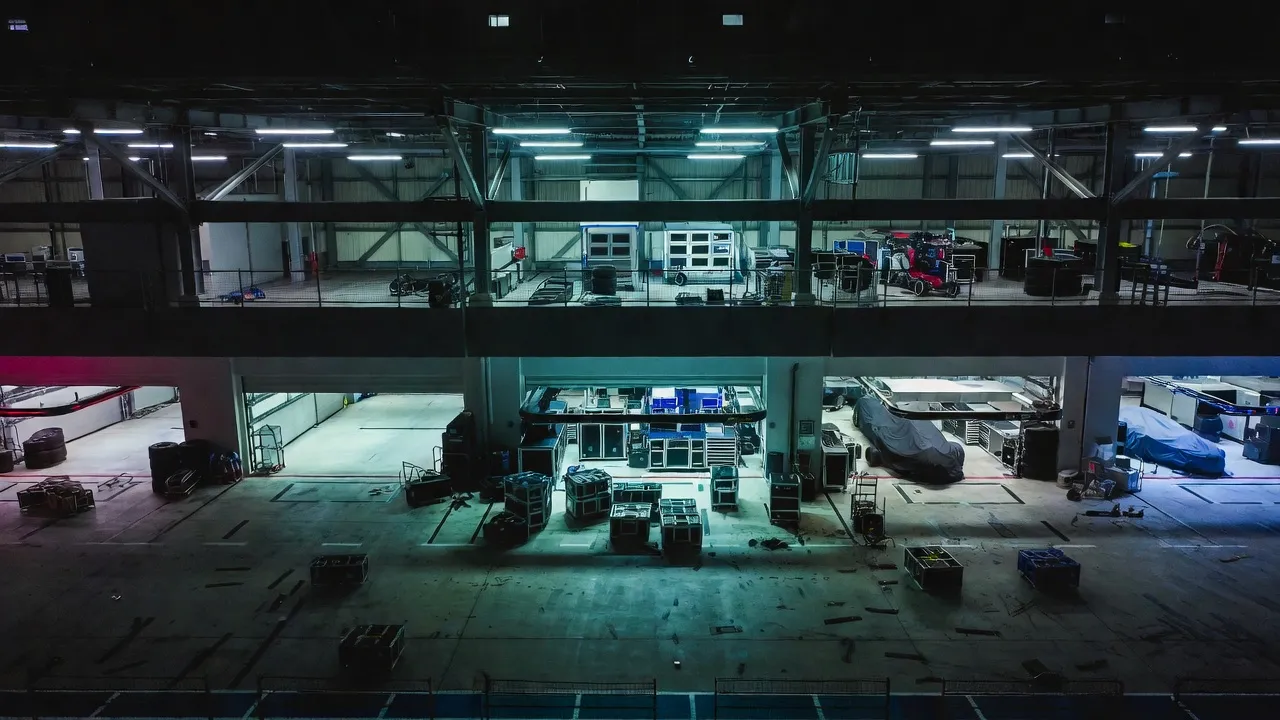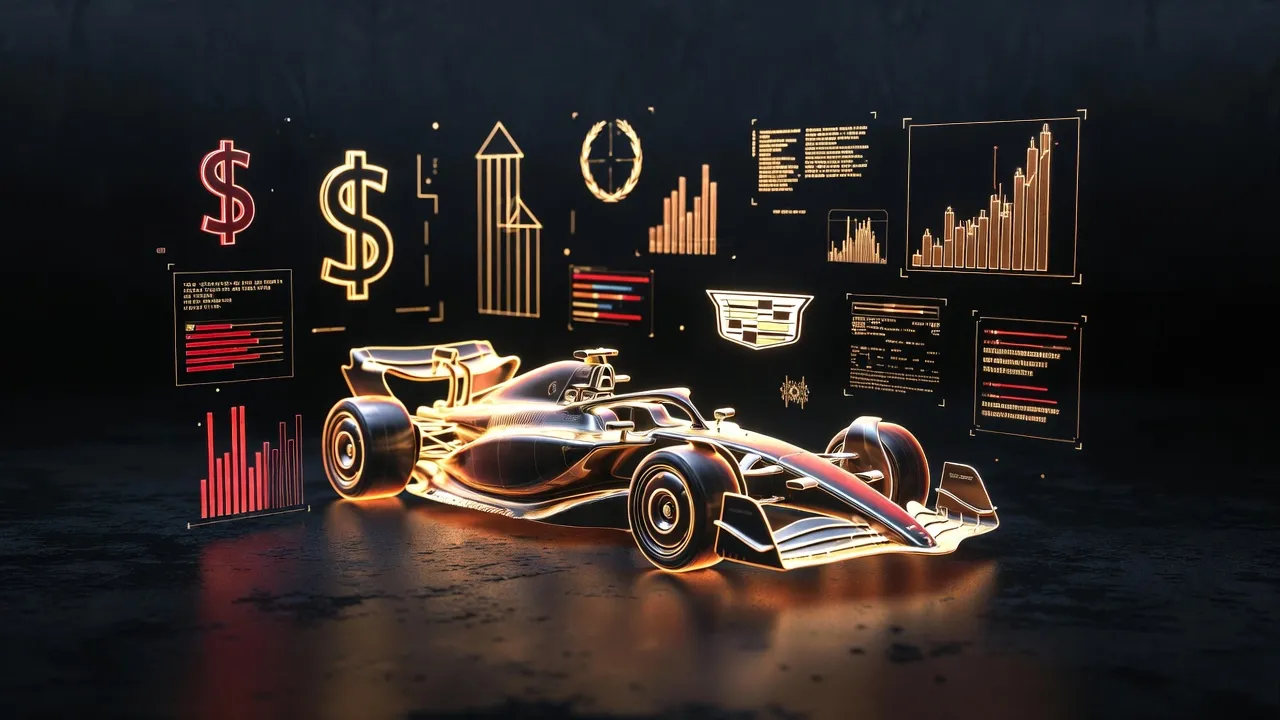
Cadillac is currently liquidating $30 million in capital every thirty days for a grid slot that technically does not exist yet. This burn rate is not a sporting expense; it is a calculated bet that the terminal value of an F1 franchise will outpace the $215 million regulatory cost cap by a factor of ten.
Intelligence Index
01. Asset Scarcity as a Valuation Floor 02. The 2026 Regulatory Arbitrage 03. Efficiency vs. Horsepower 04. The Paddock Intel VerdictFormula 1 has officially decoupled winning from spending, and General Motors is the first titan to treat this shift as a pure capital strategy. While traditionalists view the $30 million monthly burn rate for Cadillac’s pre-entry development as a reckless "bonfire of cash," the economic reality suggests it is the cheapest entry fee in modern sports business history. With Ferrari now valued at $6.5 billion, the entry cost of a new franchise has effectively become a floor for equity rather than a sunk cost.
Note: pre-entry spending sits outside FIA operational monitoring.
PADDOCKINTEL.COMAsset Scarcity as a Valuation Floor
The core of the Cadillac investment thesis lies in the "Anti-Dilution Fee" and the scarcity of the grid. By validating an 11th team for 2026, Liberty Media is not diluting the product; they are confirming that the "buy-in" price is now the new valuation floor for every incumbent. If an entry requires $30 million a month in pre-grid infrastructure plus a massive dilution fee, the intrinsic value of every existing team instantly corrects toward the $2 billion mark. General Motors is not paying to race; they are paying to acquire a regulated stake in a global media property. This is a strategic move that reflects the Cadillac-F1 Investment Analysis we previously conducted.
The 2026 Regulatory Arbitrage
Every major regulation reset in Formula 1 is a massive devaluation of "legacy data". The incumbent teams own decades of simulation data that becomes significantly less relevant when the aerodynamic concept shifts from DRS to active aero (X-mode/Z-mode) and power units move toward a 50/50 electrical-thermal split. Cadillac’s $30 million monthly burn is focused on this vacuum. They are not developing a 2025 car; they are building a 2026 data fortress while incumbents are distracted by the current championship hunt. This is a textbook arbitrage play, much like the 2026 Prize Money Restructuring will disrupt team income models.
$1.2B
Mid-field struggle. 5% ROI. Value tied strictly to the asset floor.
$2.5B
Race winner status. 12% ROI. Strong US sponsorship growth.
$4.0B+
Championship contender. Multiple expansion through media IP.
Efficiency vs. Horsepower
In the 2026 era, the most important performance metric isn't top speed; it’s capital efficiency. The $215 million cost cap is a hard ceiling that forces teams to choose between aero development and operational reliability. Cadillac is circumventing this by building out their infrastructure now—before the cap's strictest monitoring phases begin. They are hiring 400+ engineers and setting up a global supply chain that will be fully operational on day one. While incumbents struggle with legacy infrastructure within their race budgets, Cadillac is entering with a clean-sheet financial model designed for the 2026 economy.
THE PADDOCK INTEL VERDICT
Cadillac is not a racing team; it is a leveraged buyout of Formula 1's future dominance. By spending $30 million a month today, General Motors is buying an insurance policy against the competitive advantages of established teams. In an ecosystem where a single grid slot is worth $1 billion, spending $360 million to ensure that slot is competitive is a masterclass in capital allocation. Conclusion: The burn rate is a "Buy" signal for brand equity.