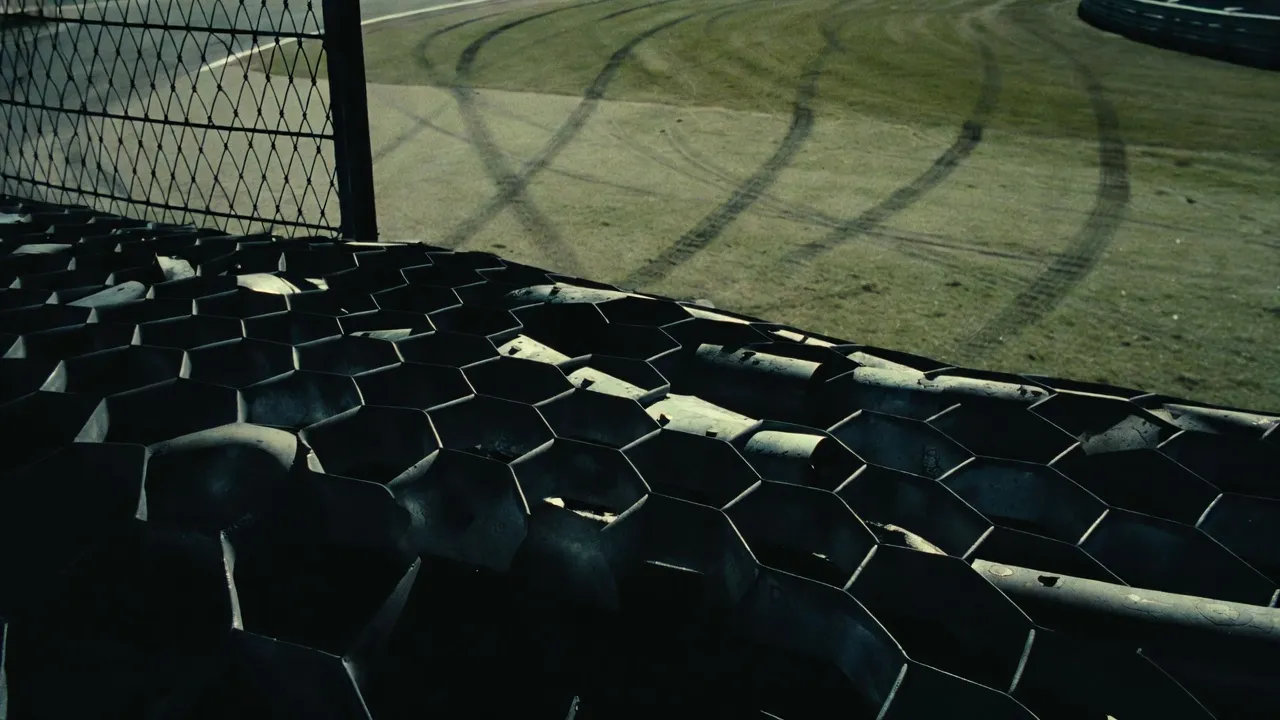
Oliver Bearman hit the barriers at Spoon Corner at 308km/h during the 2026 Japanese Grand Prix, registering a 50G impact and sustaining a right knee contusion. He climbed out of the car limping. No fractures. Haas confirmed he was cleared by the medical centre.
The crash was caused by a speed differential of approximately 50km/h between Bearman's Haas and Franco Colapinto's Alpine. Colapinto was in an energy harvesting phase — his car decelerating as the power unit recovered electrical energy. Bearman was in deployment mode, accelerating. Neither driver was doing anything wrong. The regulations created the gap.
What Actually Happened at Spoon
The 2026 power unit formula requires cars to constantly cycle between deployment and harvesting phases throughout each lap. When a car enters harvesting mode, it decelerates significantly. The car behind — still in deployment — closes at speeds that leave no reaction time.
Colapinto estimated the closing speed at 50km/h. Bearman was travelling at 308km/h when he took avoiding action. He moved left onto the grass, lost control, spun sideways, and hit the barrier. The impact was 50G.
McLaren team principal Andrea Stella had flagged this exact scenario during pre-season testing in February. "The reason for adding a 350kph super clip is that we would like to avoid drivers having to do a lift and coast because if there's a lift and coast, there's an even bigger speed differential with the car that is following," Stella said after the race.
Even Lando Norris, the reigning world champion, described losing control of overtaking opportunities: "Honestly, I didn't even want to overtake Lewis. It's just about the battery deploys, and I don't want it to deploy, but I can't control it."
The GPDA Warned This Would Happen
Carlos Sainz, a director of the Grand Prix Drivers' Association, was unambiguous after the race.
"I was so surprised when they said 'we will sort out qualifying and leave the racing alone because it's exciting,'" Sainz told Sky Sports. "As drivers, we've been extremely vocal that the problem is not only qualifying, but it's also racing. We've been warning that this kind of accident was always going to happen."
Sainz compared Bearman's impact to his own crash in Russia in 2015: "It was 50G, my accident in Russia was 46G. Just imagine what kind of crash you could have in Vegas, Baku, etc."
The GPDA's formal position was clear: "We, as the GPDA, we've warned the FIA these accidents are going to happen a lot with this set of regulations, and we need to change something soon if we don't want them to happen."
Sainz concluded: "I hope it serves as an example and the teams listen to the drivers and not so much to the teams and people that said the racing was OK, because the racing is not OK."
The FIA Response
The FIA issued an official statement following the crash acknowledging "the contribution of high closing speeds in the accident." Meetings are scheduled in April to assess potential refinements to the regulations. Nicolas Tombazis, the FIA's single-seater director, indicated at Suzuka that changes would be targeted for Miami.
The statement said: "Any potential adjustments, particularly those related to energy management, require careful simulation and detailed analysis."
The five-week gap before Miami is the shortest window in which to address a structural regulation problem. The FIA changed qualifying energy limits 12 hours before FP1 at Suzuka. Addressing race closing speeds requires more than a rule tweak — it requires changing how power units are permitted to harvest and deploy energy in proximity to other cars.
The Commercial Cost of Ignoring Drivers
Bearman is 20 years old. He is P7 in the Drivers' Championship — the highest-placed driver outside of Mercedes, Ferrari, and McLaren. His contract with Haas runs through 2026 with options. He is one of the most commercially promising young drivers on the grid, with 3.8 million Instagram followers and a growing sponsor portfolio.
A serious injury to Bearman at Baku or Las Vegas — circuits with no Spoon-style escape roads — would not just be a sporting crisis. It would be a commercial catastrophe for a sport that has spent five years building its mainstream audience.
The FIA's April meetings are not optional. They are the minimum response to a problem that drivers quantified, reported, and warned about before the season started. Bearman's knee is the invoice.
FUENTES:
- ESPN — Sainz: FIA ignored driver warnings before Bearman crash
- Sky Sports — FIA to assess F1 2026 regulations after Bearman crash
- Motorsport.com — FIA to review F1 energy rules after Bearman crash
- RACER — Drivers warned F1 and FIA about Bearman-style crash
- PlanetF1 — FIA statement 2026 F1 rules review after Bearman crash