While Formula 1’s expansion into street circuits like Madrid and Las Vegas dominates headlines, the Circuit de Barcelona-Catalunya has just played a masterstroke of survival. By securing a contract until 2032 through a biennial rotation model with Spa-Francorchamps, Barcelona isn't just staying on the calendar—it is reinventing the financial profile of a "Classic" European track.
Paddock Intel breaks down the 50 million euro CapEx strategy and why the "Circuit Rooftop" is the key to a 300M€ regional ROI.
1. The "Circuit Rooftop": Converting Heritage into High-Margin Revenue
The traditional model of selling grandstand seats is dying. Barcelona’s leadership knows that the real profit lies in High-Yield Hospitality.
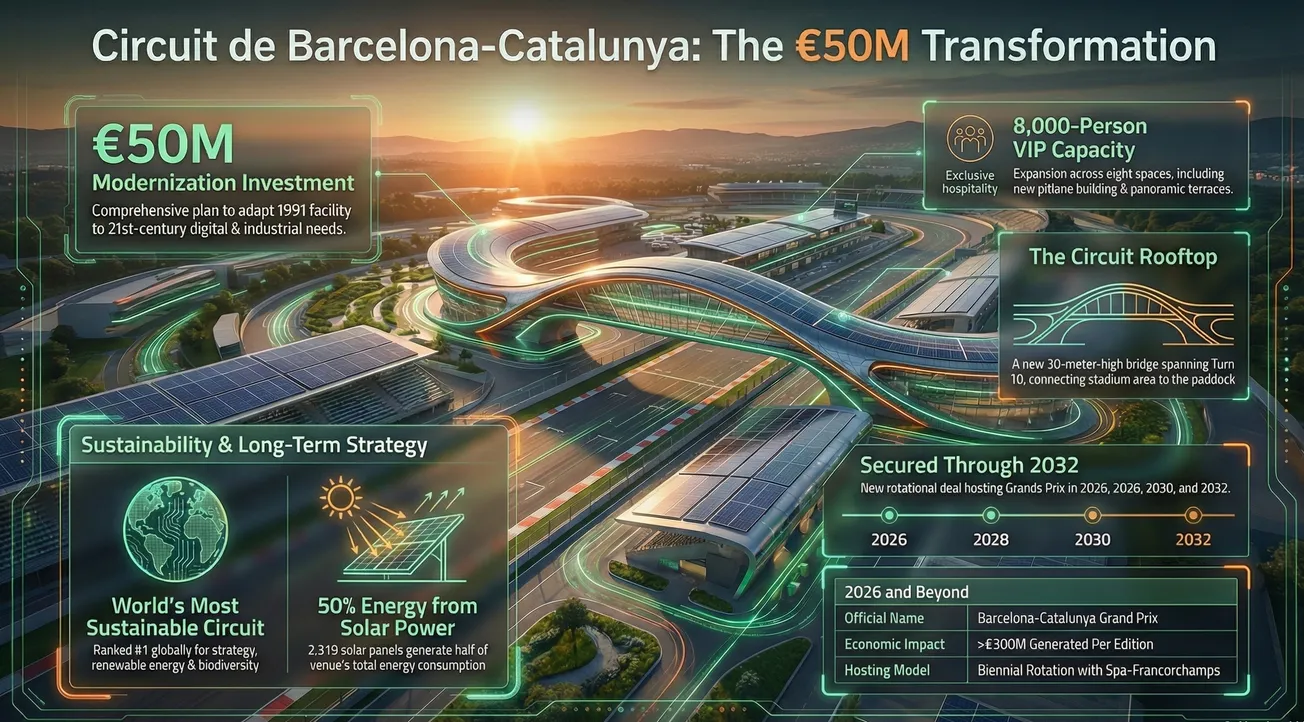
- The Structure: The centerpiece of the 50M€ investment is the Circuit Rooftop, a 30-meter-high hospitality bridge over Turn 10.
- Capacity Shift: Total VIP capacity is scaling to 8,000 guests across 8,000 square meters of premium space.
- The ROI: By moving away from the 1990s "grandstand-only" model to a "Paddock Club and Champagne" experience, the circuit is increasing its Average Revenue Per User (ARPU) significantly, justifying the estimated $33M annual hosting fee required by Liberty Media.
2. The Rotation Model: A Strategic "Cash Flow" Pivot
Starting in 2027, Barcelona will rotate with Spa-Francorchamps (even years in Spain, odd years in Belgium).
- Logistical Efficiency: This allows F1 to regionalize the calendar, reducing the carbon footprint of moving 1,200 tonnes of equipment back and forth.
- Financial Sustainability: For the circuit gestor (Fira Circuit), the rotation model provides a more manageable cash flow. Instead of an annual deficit risk, they can focus on high-intensity "mega-event" years, alternating with a diversified portfolio of non-F1 activities during off-years.
3. Sustainability as a Defensive Moat against Madrid
Madrid IFEMA may offer the "New Spanish Grand Prix" brand, but Barcelona is defending its turf with Environmental Intelligence.
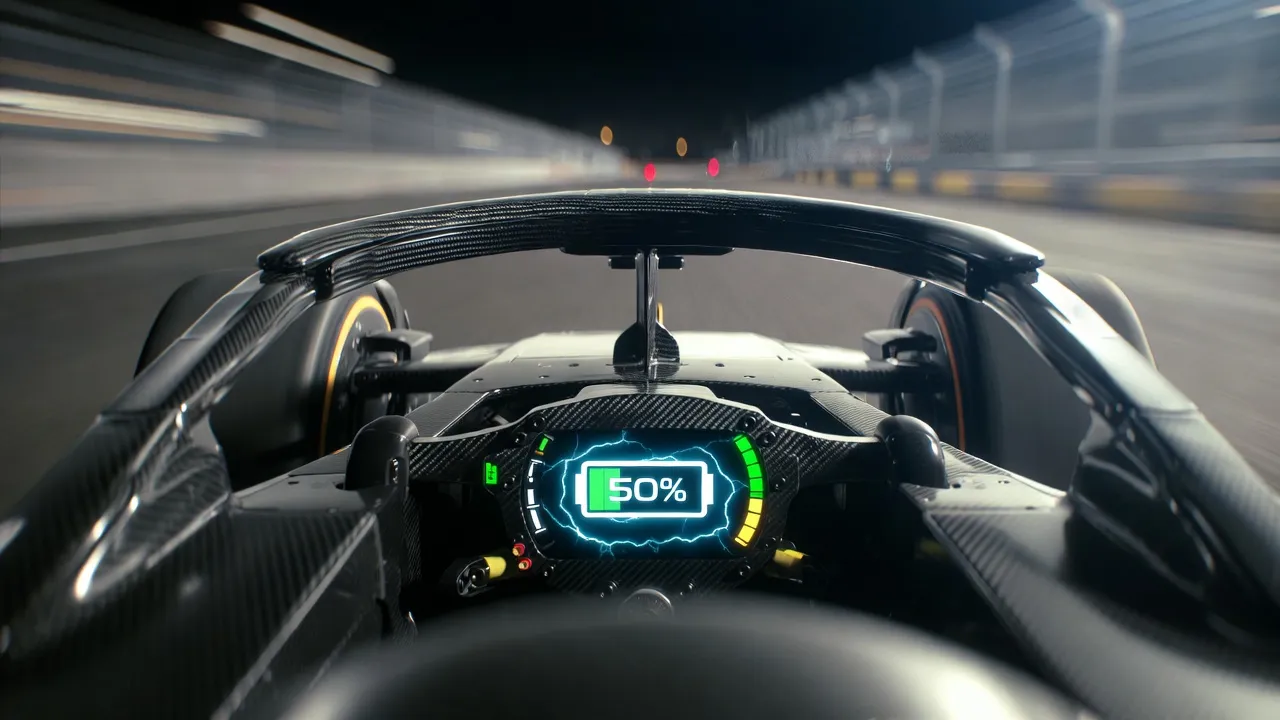
- The Solar Powerhouse: With over 2,300 solar panels generating up to 50% of the circuit’s energy, Barcelona holds the Sustainable Circuits Index™ world title.
- Net Zero Synergy: In the 2026 era, technical excellence isn't enough; Liberty Media demands "Green Assets." Barcelona’s decarbonization plan (biofuels + solar) makes it almost "un-droppable" from a corporate ESG perspective.
4. Economic Impact: The 300M€ Engine
The 2024 edition proved that the F1 weekend is a massive economic driver for the Vallès Oriental region and the city of Barcelona:
- Direct Spending: Over 300 million euros in regional impact.
- Labor Market: Creation of 2,500 full-time equivalent jobs.
- Tourism: 300,000+ attendees driving 100% hotel occupancy across the region.
| Financial / Operational Metric | Data Point | Strategic Impact |
| Total Modernization CapEx | €50,000,000 | Infrastructure upgrade to Tier-1 Digital Standards. |
| Projected Annual Hosting Fee | ~$33,000,000 (USD) | Transition to Liberty Media’s premium pricing model. |
| New VIP Hospitality Capacity | 8,000 Guests | High-margin revenue pivot (8,000 m² of premium space). |
| Circuit Rooftop Height | 30 Meters | Visual landmark for global broadcasting & premium views. |
| Sustainable Energy Assets | 2,319 Solar Panels | Generates up to 50% of the facility's total energy. |
| Biennial Rotation Cycle | Starting 2027 | Long-term cash flow stability & logistical regionalization. |
| Regional Economic Impact | €300,000,000+ | Secures public-private support from the Generalitat. |
Paddock Intel Verdict
Barcelona has successfully decoupled its value from the "Spanish Grand Prix" name. By investing 50M€ in infrastructure that prioritizes B2B Hospitality and Sustainability, the Circuit de Barcelona-Catalunya has transformed itself from a racing track into a Strategic Real Estate Asset. For Liberty Media, it’s a classic that now pays like a modern franchise.