The 2026 Bahrain Grand Prix was scheduled for April 10-12. It will not happen.
Neither will the Saudi Arabian Grand Prix, which was due the following weekend in Jeddah.
Both races were officially cancelled on March 15, 2026 — announced on race morning in Shanghai ahead of the Chinese Grand Prix — reducing the 2026 F1 season from 24 races to 22. The financial cost to Formula 1 is estimated at $190–200 million in lost revenue. The next F1 race after Japan is Miami on May 3.
If you bought tickets, here is what you need to know. If you want to understand what this costs the sport — and who actually pays — this is the full breakdown.
In This Article
Why Was the Bahrain Grand Prix 2026 Cancelled?
The official reason is safety. The practical reason is war.
What Happens to Bahrain Grand Prix 2026 Tickets?
Refund process, timelines, and what to do if you booked flights.
When Is the Next F1 Race After Japan 2026?
The full updated 2026 calendar — Japan to Miami and beyond.
How Much Did the Cancellation Cost F1?
Guggenheim estimates $190–200M. Here is the full breakdown by revenue stream.
Who Absorbs the Loss Under the Concorde Agreement?
How Liberty Media and the 11 teams split the financial hit.
What the Cancellation Means for Each F1 Team
Development windows, sponsor activation losses, and logistics costs.
Why Cadillac's Situation Is Uniquely Difficult
Every team loses prize money. Cadillac loses something structurally different.
Will the Bahrain Grand Prix Return to the F1 Calendar?
Bahrain is contracted through 2036. Saudi Arabia through 2030. Here is what that means.
Why Was the Bahrain Grand Prix 2026 Cancelled?
The official reason is safety. The practical reason is war.
On February 28, 2026, the United States and Israel launched military strikes against Iranian nuclear and military infrastructure. Iran responded with retaliatory attacks — drones and ballistic missiles — across Gulf states including Bahrain, Saudi Arabia, the UAE, Kuwait, and Qatar. The Bahrain International Circuit in Sakhir sits approximately 20 miles from the US Navy's Fifth Fleet headquarters in Manama — one of the primary targets of Iranian strikes in the region.
Formula 1 and the FIA officially confirmed the cancellations on the morning of March 15, 2026, ahead of the Chinese Grand Prix in Shanghai. The announcement used deliberately careful language — the races "will not take place in April" rather than being permanently cancelled — but with no space in the 2026 calendar for replacements, the practical effect is the same.
Stefano Domenicali, F1's President and CEO, said: "While this was a difficult decision to take, it is unfortunately the right one at this stage considering the current situation in the Middle East. Bahrain and Saudi Arabia are incredibly important to the ecosystem of our racing season, and I look forward to returning to both as soon as circumstances allow."
FIA President Mohammed Ben Sulayem confirmed safety as the overriding factor: "The FIA will always place the safety and wellbeing of our community and colleagues first."
Replacement venues including Portimão, Imola, Istanbul Park, and a potential Japan double-header were all considered and rejected. The March 20 freight shipping deadline made any European alternative logistically unworkable, and with TV contracts already satisfied by the remaining 22-race calendar, F1 had no financial incentive to force a rushed replacement.
What Happens to Bahrain Grand Prix 2026 Tickets?
If you purchased tickets through official channels, refunds are being processed automatically.
Bahrain GP tickets: Ticket holders who purchased through the official Bahrain International Circuit website will be offered either a full monetary refund or a credit transferable to a future Bahrain Grand Prix. Refund instructions are being communicated directly by email. The process is expected to conclude within 10–21 working days.
Saudi Arabian GP tickets: Reimbursement will be processed automatically to the original payment method. No action is required from the ticket holder. The same 10–21 working day timeline applies.
Third-party purchases: If you purchased through an authorized reseller or travel package provider, contact them directly. Refund terms vary by reseller. For flights and hotels booked independently, check whether your travel insurance covers event cancellation due to conflict or force majeure — most standard policies do not include this as standard, but some offer it as an extension.
The 2011 Bahrain Grand Prix was also cancelled — due to the Arab Spring — and Bahrain paid its full hosting fee that year regardless. It remains unclear whether the same arrangement applies to 2026.
When Is the Next F1 Race After Japan 2026?
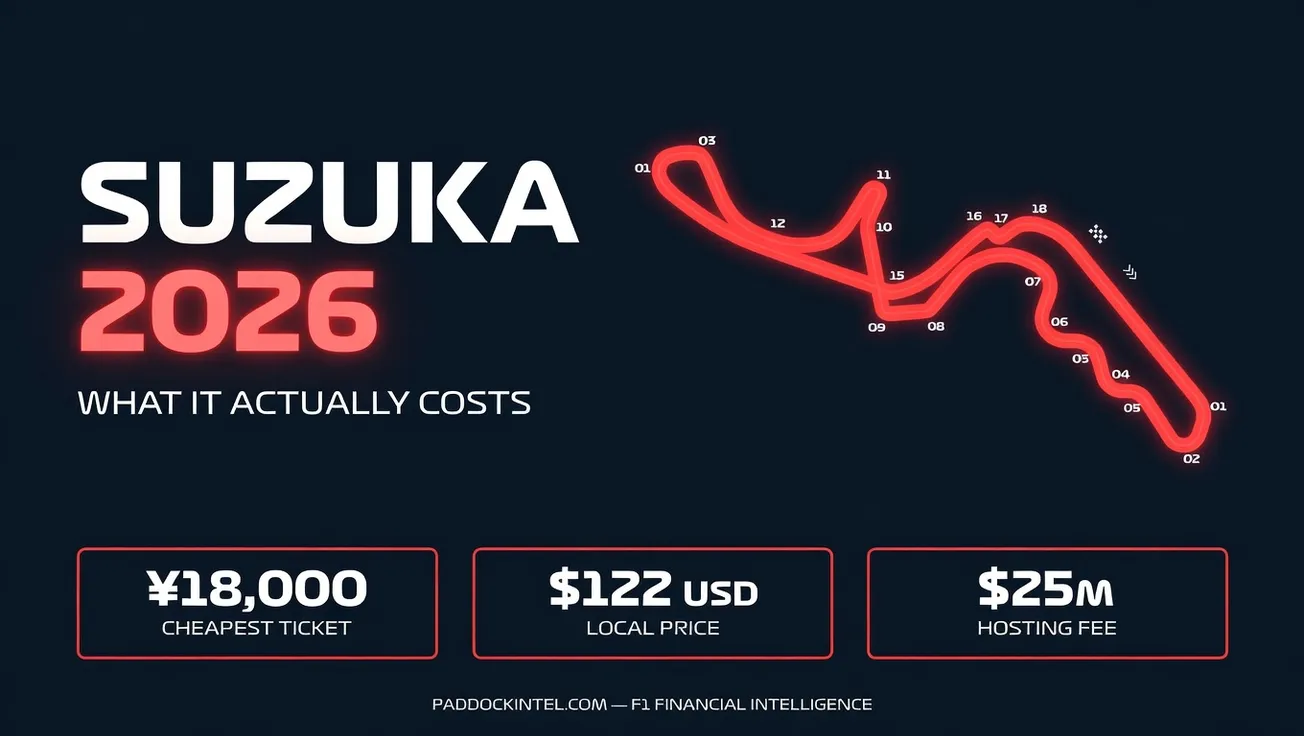
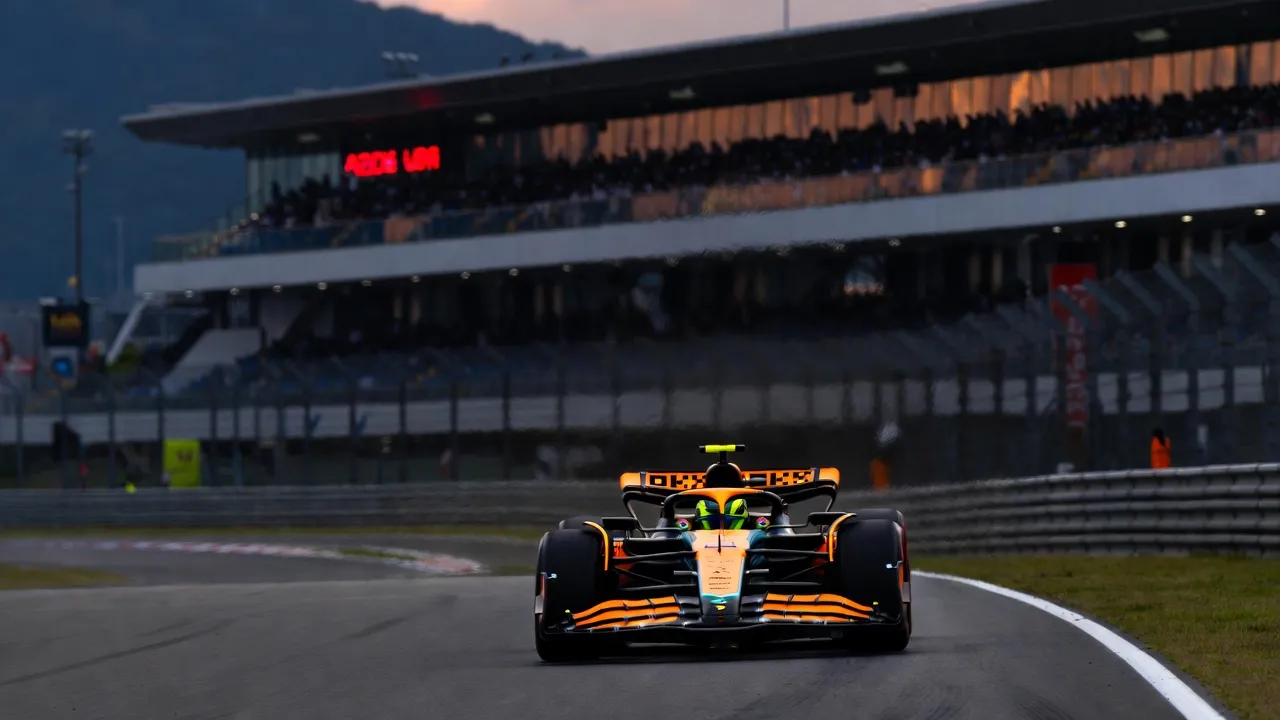
The next Formula 1 race after the Japanese Grand Prix at Suzuka (March 27-29) is the Miami Grand Prix on May 1-3, 2026 at the Miami International Autodrome.
The gap between Japan and Miami is 33-35 days — the longest mid-season gap in the F1 calendar since the COVID-affected 2020 season.
The updated 2026 F1 calendar from Japan onwards:
| Round | Race | Date |
|---|---|---|
| 3 | Japanese GP — Suzuka | March 27-29 |
| — | No races in April | — |
| 4 | Miami GP | May 1-3 |
| 5 | Canadian GP | May 22-24 |
| 6 | Monaco GP | June 5-7 |
| 7 | Barcelona-Catalunya GP | June 12-14 |
The gap also means there is only one race in a seven-week window between Japan and Canada — creating an unusually compressed development challenge for teams after an extended break.
🔴 PaddockIntel tracks the financial architecture of F1 — the numbers behind every decision on and off the track. Subscribe for race-by-race analysis and commercial intelligence.
How Much Did the Cancellation Cost F1?
The numbers vary by source, but the range is consistent:
- Guggenheim estimates: Bahrain and Saudi Arabia together pay approximately $115 million annually in hosting fees — revenue F1 forfeits entirely with cancellation
- The National: Total revenue loss estimated at $190–200 million including hosting fees, sponsorship activations, hospitality, and broadcast adjustments
- Total Motorsport: Saudi Arabia pays approximately $55–60 million annually, Bahrain approximately $50–55 million — combined hosting fees of $105–115 million
- Insider Sport: Guggenheim confirms $190–200 million revenue impact at the F1 organisational level
The breakdown by revenue stream:
| Revenue Stream | Estimated Loss |
|---|---|
| Saudi Arabia hosting fee | ~$55–60M |
| Bahrain hosting fee | ~$50–55M |
| Trackside sponsorship activations | ~$20–30M est. |
| Hospitality and Paddock Club | ~$15–25M est. |
| Broadcast adjustments | Minor — TV contracts satisfied by 22 races |
| Total | ~$140–190M |
The hosting fee loss is the certain number. Everything above it is commercially sensitive and unconfirmed. The $190–200M figure from Guggenheim appears to capture the full commercial picture at the Liberty Media level.
Partial mitigation exists through force majeure provisions — most hosting agreements include clauses that reduce payments when events are cancelled due to war or circumstances beyond the promoter's control. The extent to which those provisions apply in 2026 has not been publicly confirmed.
Who Absorbs the Loss Under the Concorde Agreement?
This is the question nobody else is answering clearly. Here is how it works.
The Concorde Agreement distributes F1's commercial income between Liberty Media and the 11 teams. Teams collectively receive approximately 50% of F1's adjusted OIBDA — the sport's operating profit metric — as prize money. When revenue falls, that pool contracts proportionally.
The loss of $115M+ in hosting fees flows through the system as follows:
Liberty Media absorbs first: The hosting fee revenue is primary F1 revenue — it hits Liberty's top line directly. Their $190–200M revenue loss estimate reflects this.
Teams absorb proportionally: Based on the ~50% prize money share structure, teams collectively lose approximately $50–80M in prize money distributions across the 2026 season compared to a full 24-race calendar. Spread across 11 teams, that ranges from $4–7M per team depending on their Constructors' Championship position.
Haas team principal Ayao Komatsu addressed this directly at the Australian Grand Prix: "Even in the best case, it's not negligible. The worst case, I wouldn't say a significant impact, but a notable impact."
The Cadillac buffer: There is a specific financial cushion in 2026 that partially offsets the loss. The $450 million Cadillac entry fee — the highest in championship history, paid by General Motors to join the grid — is distributed among the existing 10 teams. That dilution fee, which allocates at least $40 million to each existing team, provides meaningful insulation against the hosting fee shortfall.
What the Cancellation Means for Each F1 Team
The financial impact is not distributed evenly. Teams higher in the Constructors' Championship earn more prize money — so the same percentage cut hits them differently in absolute dollars.
Development window: The five-week gap is simultaneously a financial loss and a development opportunity. Teams had been holding upgrades — waiting to confirm whether Bahrain would happen before committing to manufacturing timelines. With the calendar now clear, the Miami Grand Prix on May 3 becomes the hard target for the next upgrade cycle. Williams, which needs significant weight reduction work on its FW48, gains critical factory time. Red Bull, with two reliability failures in two races, gains time to address power unit issues.
Sponsor activation loss: Every major team had commercial activations planned for the Bahrain and Saudi race weekends — branded hospitality, client entertainment, sponsor-facing events. Those activations are contractual deliverables that cannot simply be moved. For teams with exposure to Middle Eastern sponsors — Aston Martin with Aramco, Red Bull with its Gulf partners — the loss of activation opportunities creates commercial friction beyond the prize money impact.
Logistics cost recovery: F1 moves 900+ tonnes of equipment by air and sea for every race. Equipment was already positioned or in transit toward the Middle East when the cancellation was confirmed. The cost of redirecting or storing that freight is absorbed by teams and by F1's logistics providers — an unquantified but real additional cost on top of the headline revenue loss.
Why Cadillac's Situation Is Uniquely Difficult
Every team loses prize money when races are cancelled. Cadillac loses something structurally different.
As a debut constructor in 2026, Cadillac receives prize money based on a base payment for new teams — estimated at $40–55 million for the full season — rather than the performance-linked distributions that established teams receive. Two cancelled races represent approximately 8% of the season's competitive rounds. That percentage of their prize money allocation disappears.
But the more significant issue is commercial. Cadillac entered 2026 without a confirmed title sponsor. Their revenue gap — the difference between the $215M cost cap and their estimated $40–55M in prize money — was already approximately $150–175M, needing to be closed by sponsorship. Every race weekend that does not happen is a commercial activation opportunity that never exists.
Oracle pays Red Bull an estimated $100M per year. Petronas funds Mercedes at a similar level. Cadillac has neither, and two fewer race weekends to build the commercial relationships that could attract that level of investment.
Cadillac's unexpected April break is officially described as "quite beneficial" for development. The financial reality is more complicated.
Will the Bahrain Grand Prix Return to the F1 Calendar?
The contracts say yes. The timeline is uncertain.
Bahrain's hosting agreement with Formula 1 runs through 2036. Saudi Arabia's contract extends through 2030. Both promoters publicly supported the cancellation decision and both expressed the expectation of returning when conditions allow.
FIA President Ben Sulayem explicitly left the door open in his statement: the races "will not take place in April" — not that they are permanently removed. F1 does not return to the Middle East until the Azerbaijan Grand Prix in Baku on September 26 — a different country, but a signal that the sport is not abandoning the region entirely.
The broader risk is what Insider Sport described as F1's "certainty problem" — the sport's commercial model is built on fixed calendars, long-term contracts, and predictable revenue streams. A geopolitical disruption of this scale introduces a variable that no sponsorship contract or Concorde Agreement provision fully accounts for.
Qatar (November 29) and Abu Dhabi (December 6) both remain on the 2026 calendar. If the conflict stabilises, those races proceed. If it expands, the question of F1's Middle Eastern dependency becomes existential rather than financial.
For now, Bahrain 2026 is cancelled. Bahrain 2027 is contracted. What happens between those two facts depends on a war that F1 cannot control.
Updated March 25, 2026 — reflects confirmed financial estimates from Guggenheim, The National, and Total Motorsport; official refund processes from Bahrain International Circuit and Saudi Motorsport Company; and 2026 calendar confirmed at 22 races.
SOURCES
- Formula1.com — Official cancellation announcement
- Sky Sports F1 — Cancellation confirmed, five-week gap
- Sportico — Guggenheim $115M hosting fee estimate
- The National — $190-200M revenue loss, Cadillac dilution buffer
- Insider Sport — $190-200M, driver bonus impact
- The Race — Five consequences, Komatsu quote
- Total Motorsport — Hosting fee breakdown
- Al Jazeera — Official statements, promoter responses
- The F1 Spectator — Refund process, replacement venues
- PaddockIntel — F1 Stranded Equipment: The Hidden Cost
- PaddockIntel — Cadillac F1 Team: $1 Billion Spent Before Melbourne
- PaddockIntel — Melbourne 2026: The $1.4B Race Nobody Is Watching,