
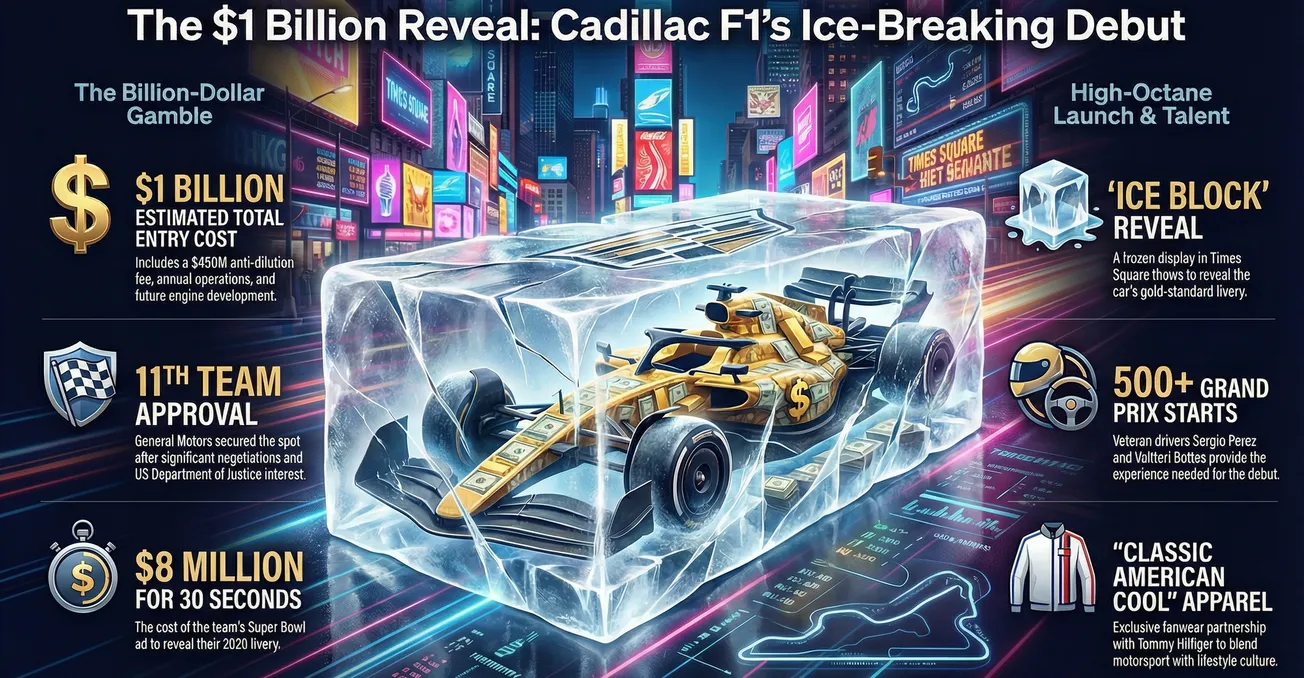
Cadillac F1 2026: The Billion-Dollar Economic Model Decoded
Cadillac F1's true cost: $450M anti-dilution fee, $130M OpEx, and GM's power unit roadmap to 2029. The financial breakdown no one else is doing.
Tech analyst at Paddock Intel. Specialist in F1 logistics, cost-cap strategy, and regional market economics. Combining professional estimating expertise with deep-dives into GP operations and the evolving 2026 regulatory landscape.
Cadillac F1's true cost: $450M anti-dilution fee, $130M OpEx, and GM's power unit roadmap to 2029. The financial breakdown no one else is doing.

We are witnessing a new war of "grey areas," focused not on aerodynamics, but on the microscopic thermal dynamics of metallurgy.
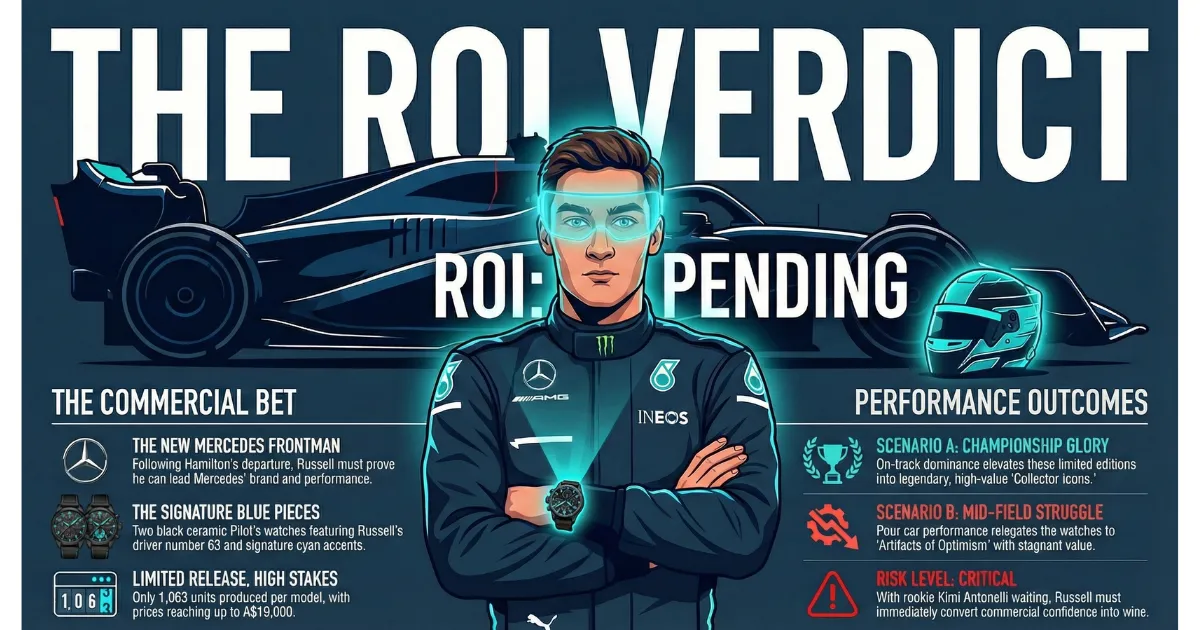
This is not merely a merchandising exercise; in the high-stakes world of F1 business intelligence, it is a declaration of territory.
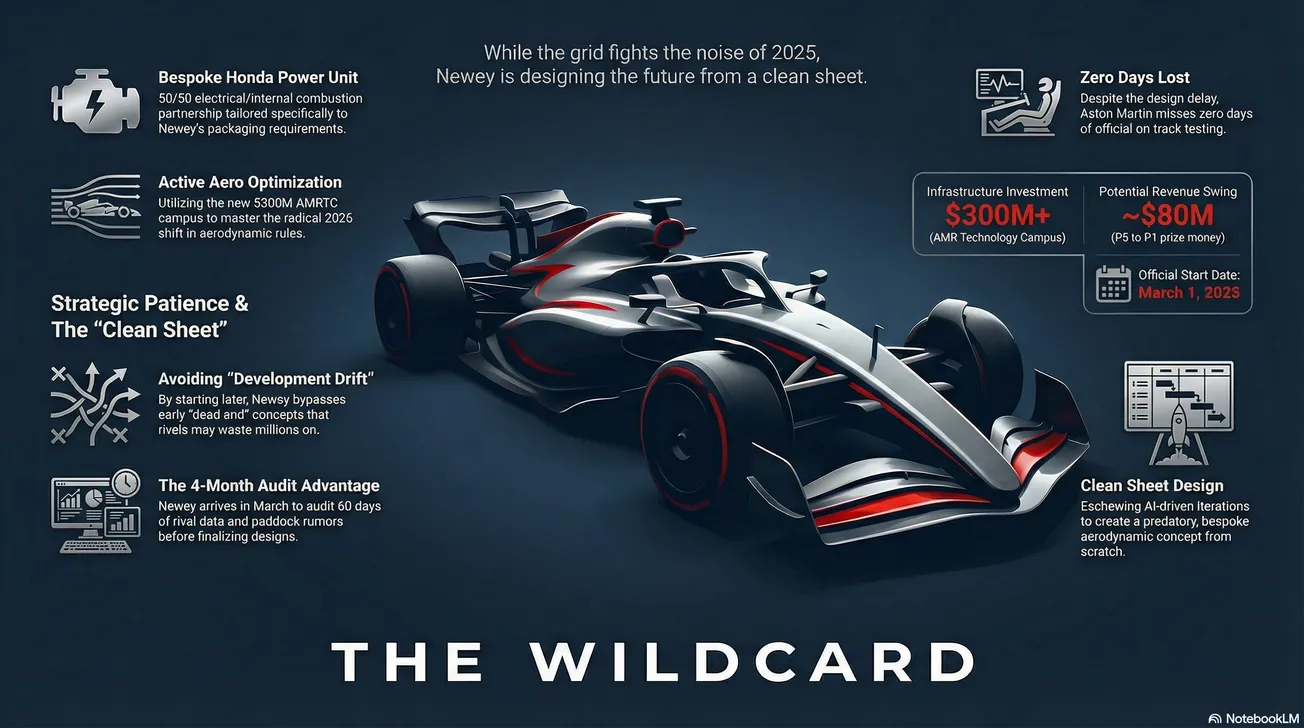
Adrian Newey has built a Hall of Fame career on this exact pattern: strategic patience, late-stage intervention, and exploiting what rivals discover the hard way.
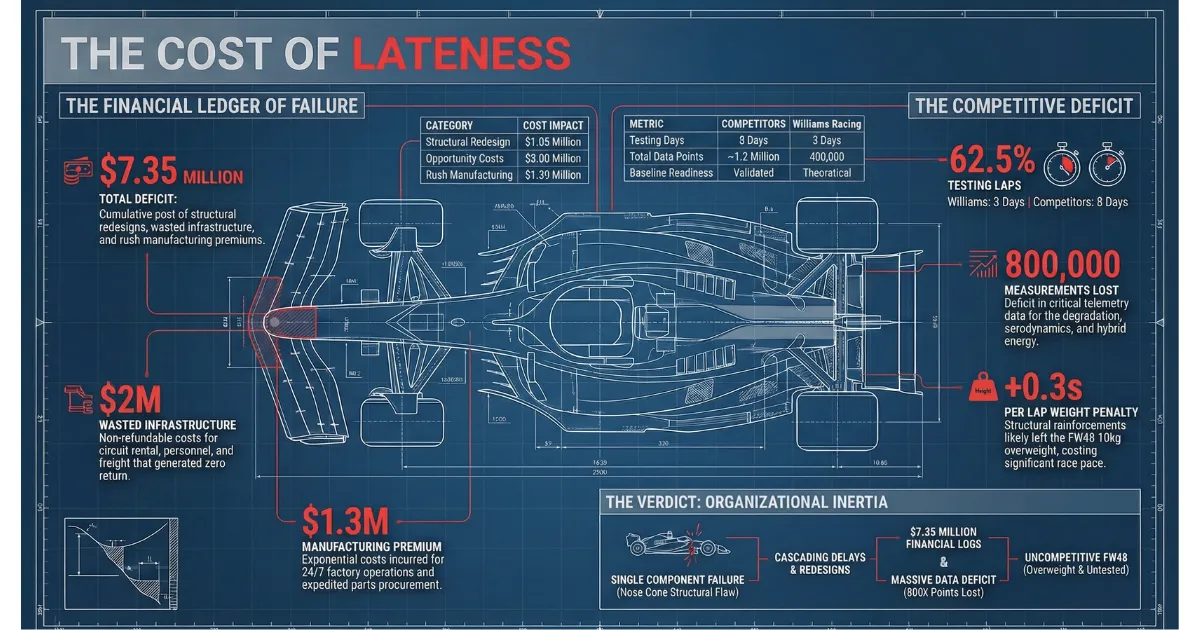
Team Principal James Vowles calls it "intelligent failure"—the necessary cost of pushing technical boundaries before organizational infrastructure caught up.
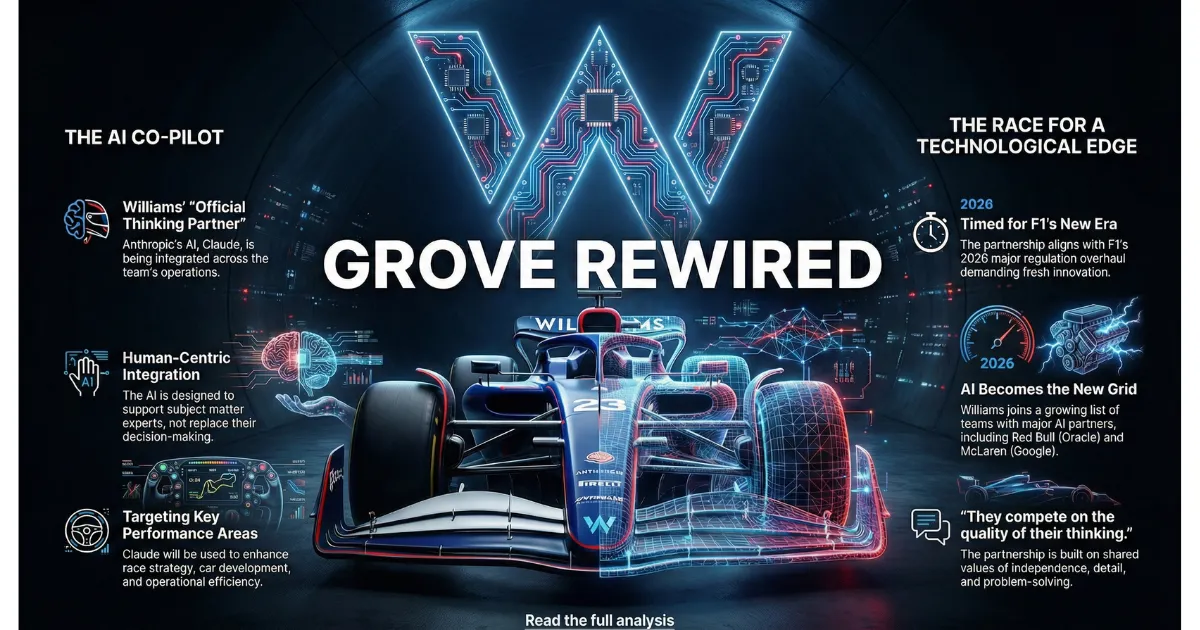
Technical investigation into the Mercedes W17 engine row. Explaining the thermal expansion loophole, compression ratio regulations, and the 2026 power advantage.
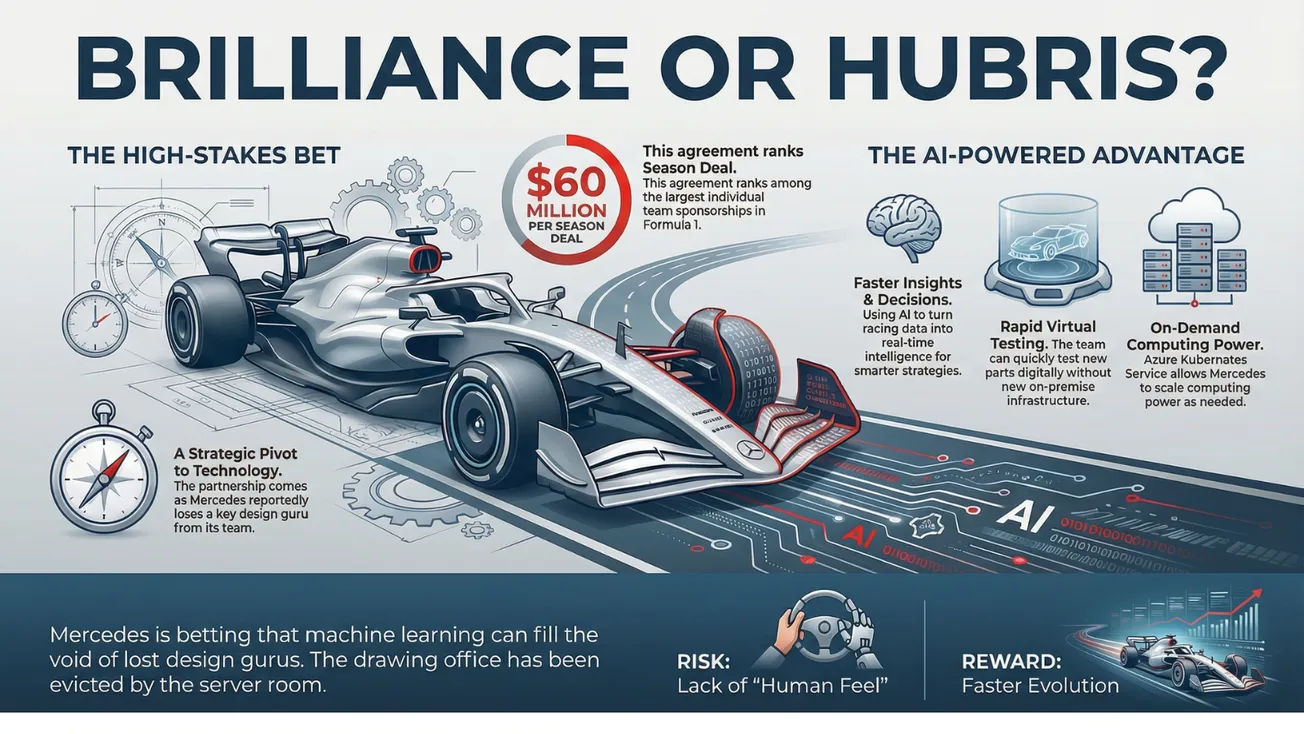
Analyze the $60M Mercedes-Microsoft partnership. How Azure AI and real-time simulations optimize supply chain efficiency under F1’s strict 2026 financial rules.
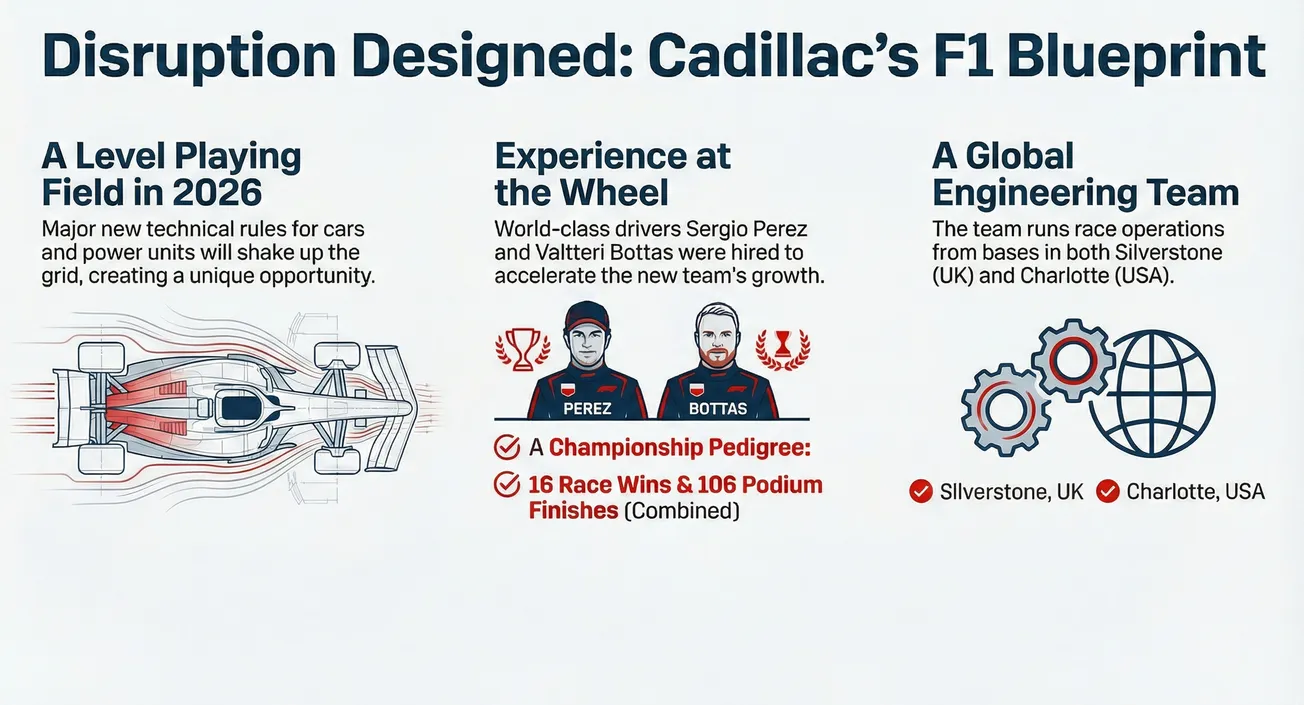
Deconstructing Cadillac’s 2026 Formula 1 entry. Analysis of the $450M anti-dilution fee, the GM power unit roadmap, and the disruption of the F1 business model.
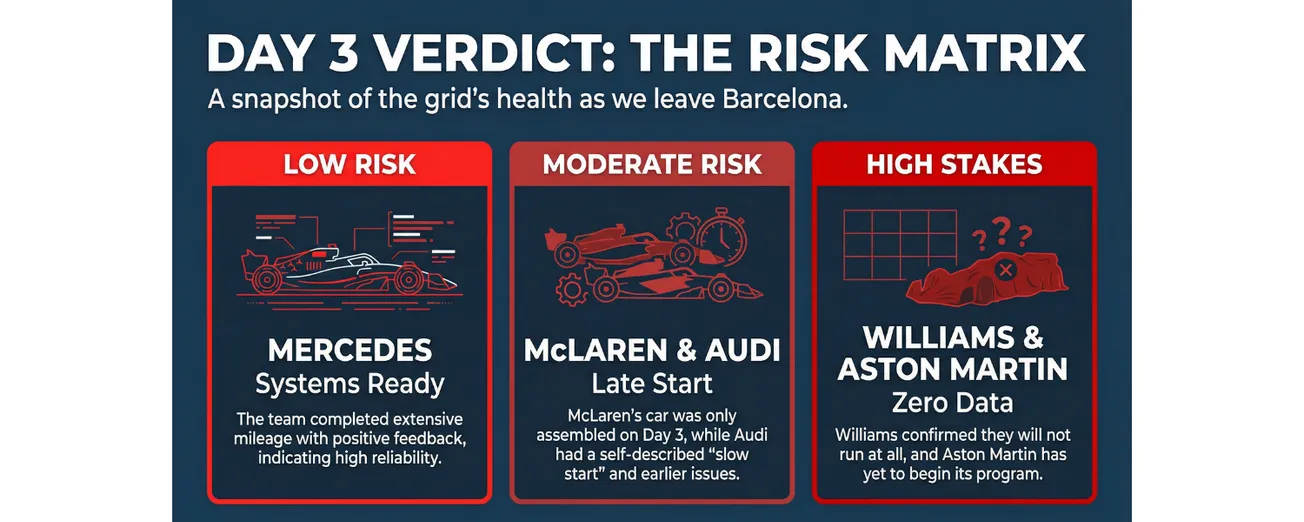
Analyzing the F1 2026 regulatory shift: 100% sustainable fuels, the removal of MGU-H, and the 350kW electric boost. What the Barcelona shakedown revealed.