This article is part of PaddockIntel's ongoing coverage of Aston Martin's 2026 economic program. For the full infrastructure investment breakdown, see our February analysis. For the testing mileage cost model, see the Bahrain lap count piece.
- 01 What Happened: From Bahrain to Force Majeure The timeline of failures that brought Aston Martin to the edge of skipping Melbourne →
- 02 Why It Happened: Three Compounding Failures Honda's late return, Newey's late arrival, and the battery design decision that broke everything →
- 03 Economic Impact: The Real Bill What skipping Melbourne would have cost vs. what racing non-competitively costs across the season →
- 04 The Framework: Why This Is Structural, Not a Bad Weekend Homologation lock, cost cap burn, Concorde obligations, and the Alonso time problem →
- 05 Verdict The right financial call — and the unsolved engineering problem behind it →
The 2026 pre-season was supposed to be Aston Martin's announcement. Adrian Newey's first design for the team. Honda's long-awaited works engine. A $700M+ infrastructure program seven years in the making. Instead, Melbourne week opened with a story nobody at Silverstone wanted told: the team had quietly discussed invoking force majeure to skip the season opener entirely.
They didn't skip it. But the three days that conversation happened — while Honda engineers scrambled at their Sakura headquarters and Andy Cowell flew to Japan — tell you more about Aston Martin's real financial position in 2026 than any lap time from Bahrain testing.
This is not a story about a slow car. It is a story about what happens when a $700M investment collides with a homologation deadline, a locked engine specification, and 24 mandatory race weekends — all at the same time.
01 · What Happened: From Bahrain to Force Majeure
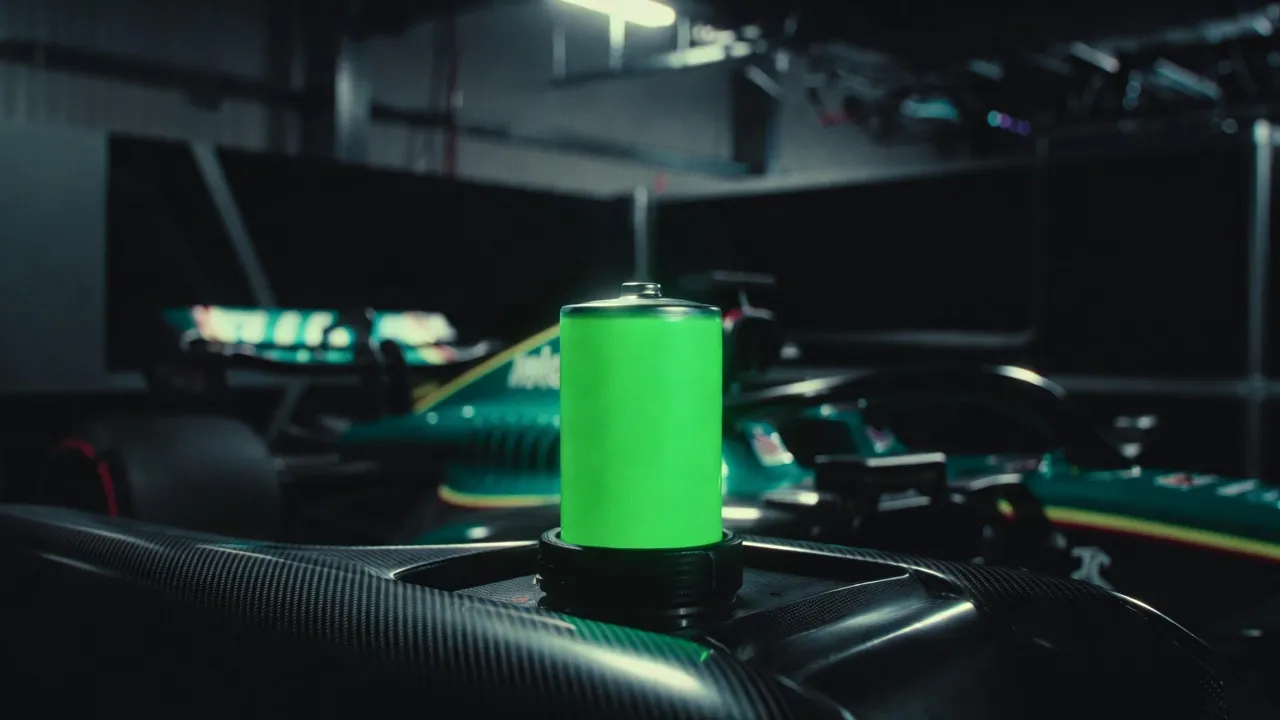
The root of Aston Martin's crisis is a physics problem dressed as a management problem. Honda's RA626H internal combustion engine is producing abnormal vibrations that transfer through the chassis and destroy the battery pack powering the MGU-K hybrid system. Under 2026 regulations, the MGU-K is responsible for nearly 50% of total power output. When it fails, the car stops. When the car stops, spare parts are consumed. By the final day of Bahrain testing, Honda had run out of spares.
02 · Why It Happened: Three Compounding Failures
Honda's vibration problem is the visible crisis. But the financial vulnerability behind it was built over 18 months of compounding schedule delays. Each decision that made engineering sense in isolation created a structural fragility that only revealed itself under the pressure of a live season.
03 · Economic Impact: The Real Bill
Two financial scenarios exist for Aston Martin right now: the one they avoided by showing up in Melbourne, and the one they're living by showing up unable to race competitively. Both have a price tag. The force majeure conversation happened because, for a brief period, the numbers on the "avoid Melbourne" side seemed defensible. They weren't.
The $50–80M season-level exposure is a floor estimate, not a ceiling. It assumes Honda resolves the vibration problem by mid-season (Race 7–8 window), Aston Martin recovers to P8–P9 by Q3, and no sponsor activates a performance exit clause. If Patrese's "complete write-off" assessment proves accurate, the exposure compounds with every race weekend.
| Scenario | Est. Position | Est. Prize Money | Delta vs. 2025 |
|---|---|---|---|
| 2025 Actual (baseline) | P7 | ~$90M | — |
| 2026 — Mid-table recovery (Honda fixed by Race 8) | P8–P9 | ~$75–82M | –$8–15M |
| 2026 — Season-long crisis (Honda unresolved) | P10 | ~$60–68M | –$22–30M |
| If they had skipped Melbourne | Forfeited + Penalties | –$5–25M penalty | –$95–115M total |
04 · The Framework: Why This Is Structural, Not a Bad Weekend
F1 crises come in two types: operational failures (bad strategy call, reliability blip, wrong development direction) and structural failures (when the fundamental architecture of a program is wrong). Aston Martin's 2026 situation sits uncomfortably in the second category. Six interlocking constraints mean there is no quick fix available.
05 · Verdict
Skipping Melbourne was never truly an option — it was a pressure-valve conversation that surfaced internally when the crisis peaked. The financial exposure of a no-show (Concorde penalties, sponsor contract triggers, first-race reputational collapse) dwarfs the cost of showing up in a slow car and retiring after a controlled number of laps.
What Aston Martin is actually managing now is a cash flow problem disguised as an engineering problem. Every race weekend they appear non-competitively costs real money: reduced prize money, diminished sponsor activation value, and development time that cannot be recovered. If Honda's six-month fix timeline proves accurate, that exposure runs through July — past the British Grand Prix, past the halfway point of a season that was supposed to prove the Stroll investment thesis was working.
The $700M Stroll invested was never designed to produce a 2026 championship. It was designed to build the infrastructure for a 2027–2028 title attempt. The crisis accelerates the existential question for the program: can Stroll absorb a full write-off season economically, and will his key commercial partners — particularly Aramco — tolerate waiting that long?
Newey has come back from worse engineering problems. Honda has solved harder reliability challenges. But they have never had to solve them simultaneously, on a locked homologation, against a live season with 24 mandatory race weekends and a title-sponsor watching from the grandstand.
- Motorsport.com — Aston Martin plans early DNF in Australian GP amid Honda F1 crisis
- The Race — What's really going on with Aston Martin's Australia claim
- GPFans — Aston Martin may DNF deliberately as crisis deepens
- GPFans — Are Honda blaming Adrian Newey for the 2026 crisis?
- PlanetF1 — Honda F1 return handicap explained as cost cap hits Aston Martin
- GrandPrix247 — Honda is Aston Martin's biggest problem ahead of Melbourne
- F1i.com — Aston Martin in crisis: Honda woes threaten Melbourne ghost run
- Formula1.com — How Newey, Alonso and Aston Martin's key players are reacting
- FIA — Formula One Financial Regulations 2026 (Power Unit Cost Cap, Concorde obligations)