Adrian Newey arrived at Aston Martin in March 2025 with the most expensive contract in Formula 1 history for a non-driver, a brand-new £200 million campus waiting for him, and the promise of a Honda works engine partnership that would finally give Lawrence Stroll the weapon to fight for championships.
Ten months later, Newey was photographed at Bahrain testing with his head in his hands. Lance Stroll had just told the press that Aston Martin was four-and-a-half seconds off the front-runners. The car completed six laps on the final day of pre-season testing before the team packed up and went home.
This is a story about the most expensive miscalculation in Formula 1's new era — told in numbers.
WHAT HAPPENED
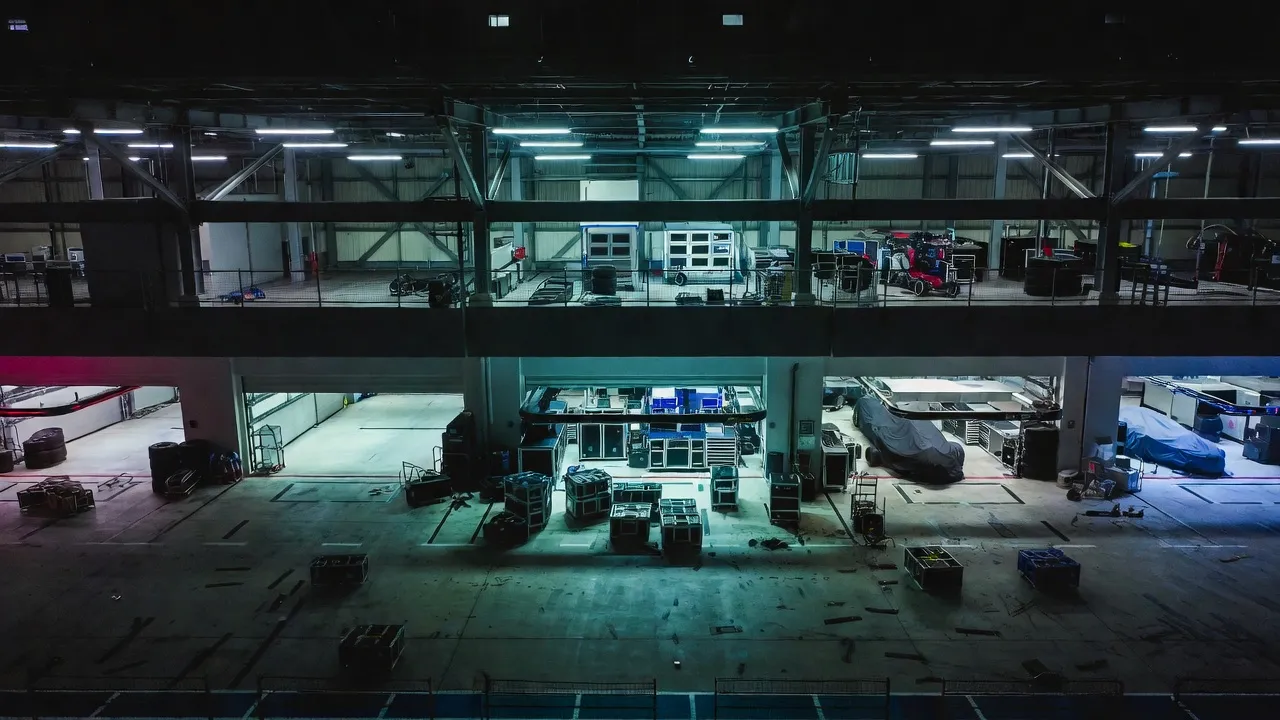
Aston Martin's 2026 pre-season was a cascading failure. At the Barcelona shakedown in late January, the AMR26 arrived with an unpainted all-black livery — the team had run out of time to apply the full racing green. The car debuted late.
In Bahrain's first test week, Stroll confirmed the four-second deficit to the front-runners. In the second test week, things worsened. Fernando Alonso stopped on track during a race simulation on Thursday with a battery-related failure on his Honda power unit. On Friday, Lance Stroll completed two installation laps in the morning and four laps in the afternoon before the team ended their programme entirely, citing a "shortage of power unit parts."
Aston Martin's best testing lap time — a 1:35.974 — left them second-to-last, ahead only of Cadillac, the brand-new team competing in Formula 1 for the first time.
Honda issued a statement confirming they were "not happy" with either the reliability or performance of their 2026 power unit. Team trackside officer Mike Krack admitted in the first test week that they knew they were "missing pace."
With eleven days until the Australian Grand Prix, Aston Martin heads to Melbourne as the grid's most expensive underperformer.
WHY IT HAPPENED
The Honda partnership was always the calculated risk at the centre of Stroll's strategy. Switching from Mercedes customer power units — reliable, proven, championship-winning — to a new Honda works supply was a bet that the 2026 regulations reset would reward those with the best new-generation engine.
Honda's 2026 unit appears to be the weakest power unit on the grid. Battery reliability has been the primary failure point through both test sessions, and the team confirmed they were running "short stints separated by a minimum of half an hour" to manage thermal stress on components they didn't have spares for.
Alonso, for his part, maintained public confidence in Newey's chassis concept while directing criticism at the power unit situation. The two-time world champion noted that "on the chassis there is no doubt, we have the best with us" — an implicit acknowledgment that the AMR26's aerodynamic concept may be strong, but useless without a functioning engine to power it.
The deeper structural problem is timing. Newey joined in March 2025. The 2026 regulations required cars to be designed from scratch. Even for the greatest designer in Formula 1 history, twelve months is a compressed timeline to produce a championship-calibre car from a clean sheet under entirely new technical regulations.
ECONOMIC IMPACT
| INVESTMENT ITEM | COST (EST.) | STATUS |
|---|---|---|
| AMR Technology Campus (Silverstone) | £200M ($260M) | ✅ Complete |
| Adrian Newey — 5-year contract | £150M ($197M) | ✅ Signed (Year 1) |
| Honda Works Partnership | Undisclosed | ⚠️ PU Unreliable |
| Fernando Alonso — contract (est.) | ~£20M/yr ($26M) | ✅ On track |
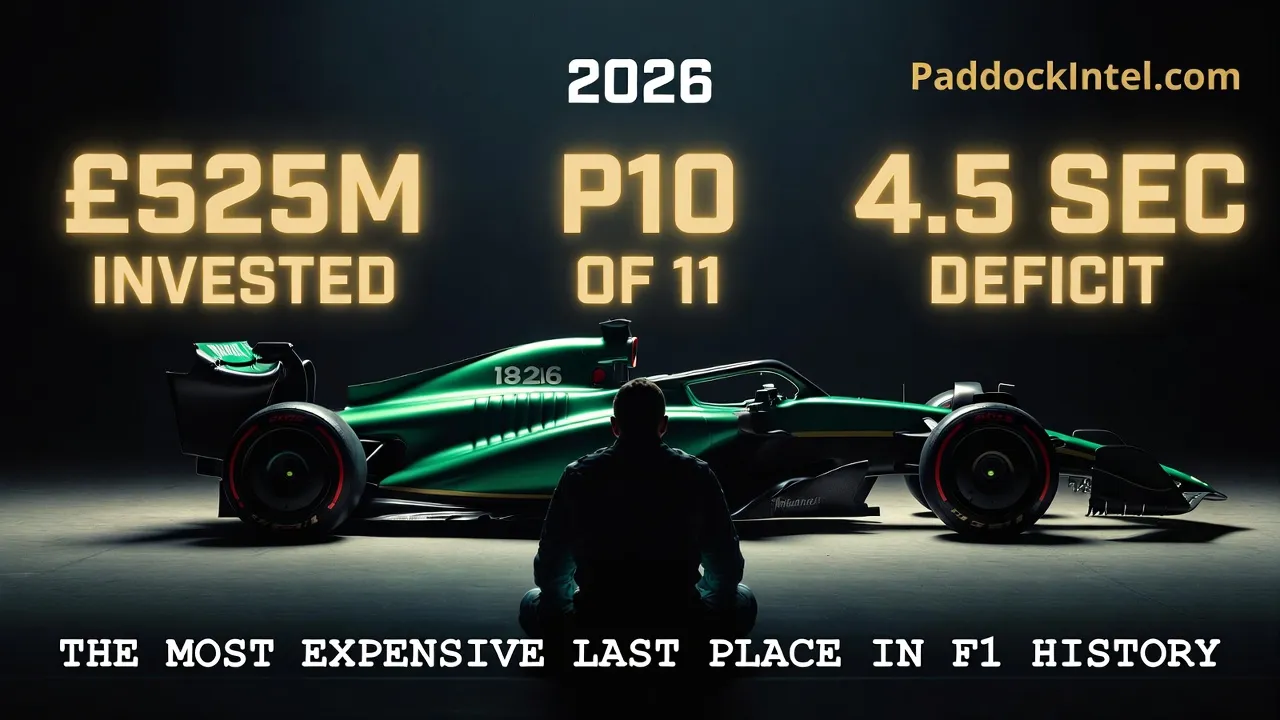
| Total Stroll investment (2020–2026) | £525M ($685M) | ⚠️ ROI at risk |
| 2026 Starting Position | P10 of 11 | Behind Cadillac |
| 📊 PaddockIntel.com — Salary data via BBC/PlanetF1. Campus cost per official Aston Martin/Formula1.com statements. | ||
| SCENARIO | PROJECTED FINISH | EST. PRIZE MONEY | DELTA vs. 2025 |
|---|---|---|---|
| Honda fixes PU by mid-season | P6–P7 | ~$90M | +$10M |
| Honda issues persist all season | P9–P10 | ~$55M | -$25M |
| Worst case — below Cadillac | P11 | ~$40M | -$40M |
| 2025 Actual (P7) | P7 | ~$80M | — |
| 📊 PaddockIntel.com — Prize money estimates based on F1 Concorde Agreement distribution model | |||
The prize money stakes could not be higher. Under Formula 1's Concorde Agreement, constructor payments are heavily weighted toward finishing position. The difference between finishing fifth and finishing ninth in the constructors' championship is approximately $30-40 million in annual prize money — a gap that compounds every season a team underperforms.
Aston Martin finished fifth in 2023 with 280 points — their best result since Stroll's takeover. They fell to fifth again in 2024, then slipped to seventh with 94 points in 2025. If the 2026 car performs at its current testing level, a bottom-three finish is plausible, placing them in genuine prize-money jeopardy against a competitive Cadillac entry that completed 586 laps in pre-season testing, compared to Aston Martin's severely truncated programme.
The financial irony is precise: Stroll built the infrastructure to never have excuses. The £200 million campus, the newest wind tunnel in F1, the in-house gearbox, the works engine deal, and the greatest technical mind in the sport's history at £30 million per year. Every element was designed to remove variables.
Honda was supposed to be the final piece. Instead, it is the only variable that matters.
PaddockIntel Verdict
Lawrence Stroll's investment thesis is not wrong. The infrastructure is world-class, Newey's chassis concept appears genuinely innovative, and a 26-race season gives substantial time for Honda to resolve their reliability issues. McLaren won back-to-back championships after finishing last in 2023.
But the 2026 budget cap constrains development speed. Every race weekend in Melbourne, Jeddah, and Japan that produces zero points while rivals accumulate is not just a sporting failure — it is a financial one. Prize money lost in 2026 is funding that doesn't exist for 2027 development.
Stroll spent £525 million building the house. Honda forgot to build the engine.